Open the metal cabinet mounted on your wall, the one with all those switches and circuit breakers, and you’re looking at your home’s distribution board. It’s easy to ignore until something trips or stops working. But this unassuming metal box is actually the heart of your entire electrical system.
Everything electrical in your home connects back to this point. Every light, every outlet, every appliance draws power through your distribution board. Understanding how it works and why it matters can help you make smarter decisions about your home’s electrical safety and efficiency.
What Exactly Is a Distribution Board?
A distribution board is essentially a control center that receives electrical power from your main supply and distributes it to different circuits throughout your home. Think of it like a highway interchange where one main road splits into multiple smaller roads, each going to a different destination.
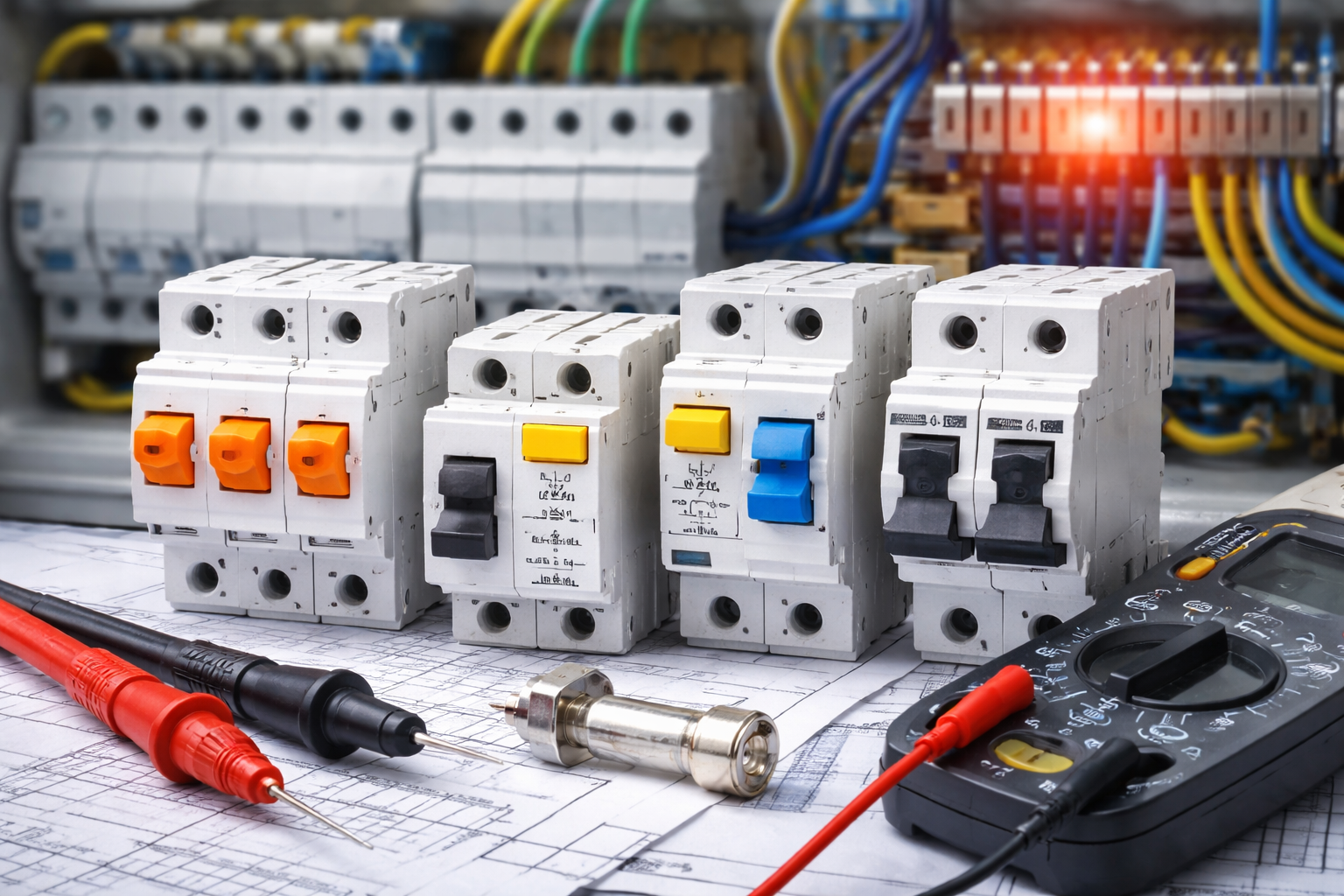
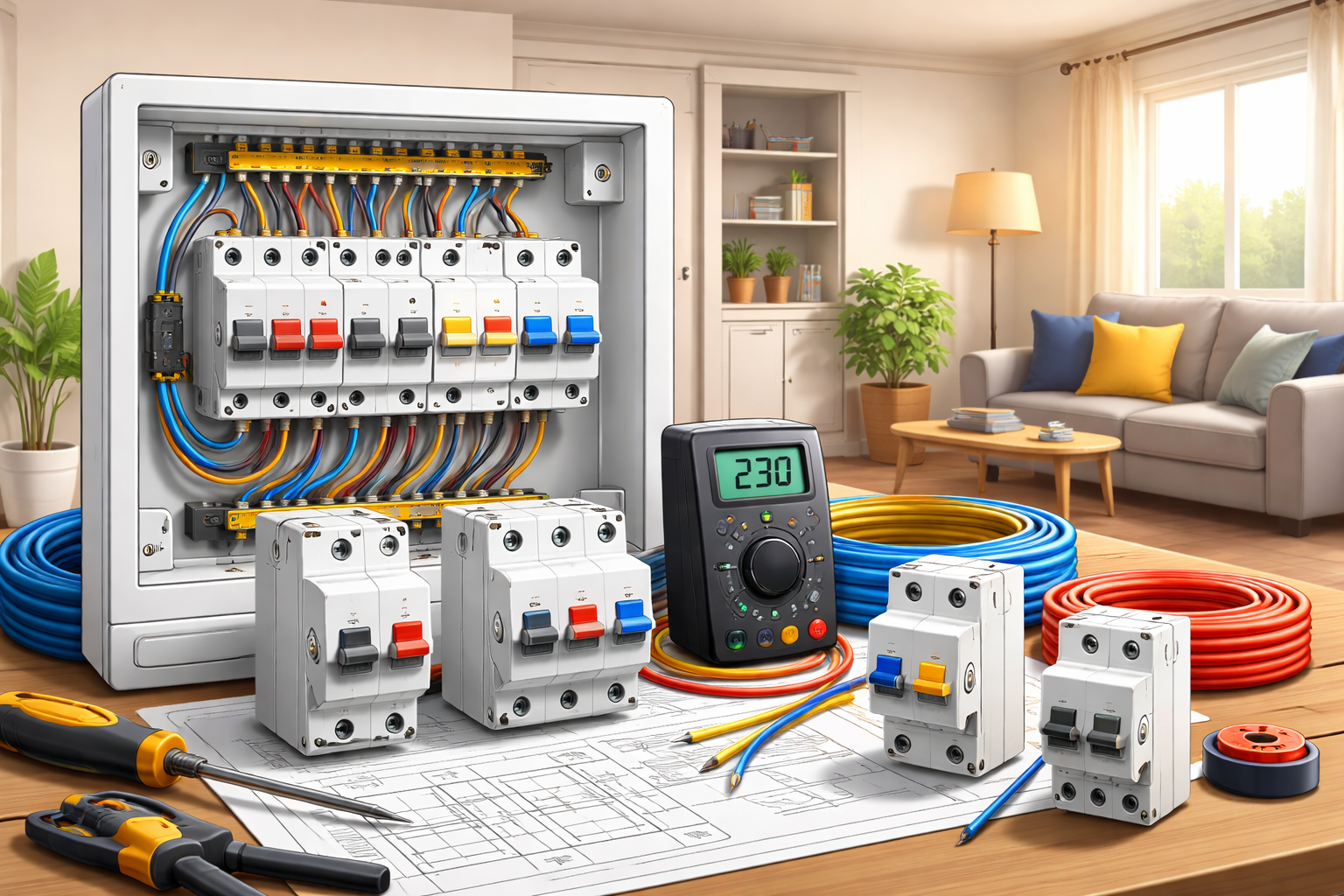
Inside that metal enclosure, you’ll find circuit breakers or MCBs, possibly an RCCB or two, a main switch, bus bars that carry the current, neutral and earth bars, and wiring connections that link everything together.
The main supply comes in, typically through a meter and main circuit breaker. From there, the distribution board divides this power among various circuits: one for your living room lights, another for kitchen outlets, one for your air conditioner, and so on. Each circuit has its own protection device that can disconnect it independently without affecting the others.
This organization isn’t just about convenience. It’s fundamentally about safety. When designed and installed correctly, a distribution board ensures that faults in one circuit don’t endanger your entire electrical system.
Why Your Distribution Board Matters More Than You Think
Most people only notice their distribution board when something goes wrong. A circuit trips, and they go flip the switch back on. But this box deserves more attention than that.
Your distribution board is the first line of defense against electrical fires. Every circuit breaker in there is monitoring current flow, ready to disconnect power if something dangerous happens. Without proper distribution and protection, a fault in your bedroom could affect your entire home.
It’s also what makes modern electrical convenience possible. Imagine if your entire home ran on a single circuit with one switch. Every time anything went wrong, you’d lose all power. The distribution board’s circuit segregation means a problem in one area stays contained.
As homes add more electrical loads, from EV chargers to home offices to smart systems, the distribution board becomes increasingly important. It needs to handle growing demands while maintaining safety. This is why companies like Eurogrid focus so heavily on manufacturing distribution boards that combine robust construction with flexible configuration options.
Inside a Distribution Board: Key Components
Let’s break down what’s actually inside that metal cabinet.
The main switch is the big one, usually at the top. It controls power to the entire distribution board. When you need to cut all electricity to your home for maintenance or emergencies, this is what you use.
MCBs or circuit breakers are the individual switches, each protecting a specific circuit. You might have ten, fifteen, or twenty of these depending on your home’s size and complexity.
RCCBs provide protection against earth leakage and electric shocks. Some distribution boards have one RCCB protecting multiple circuits, others have individual protection per circuit.
Bus bars are the metal strips that carry current from the main switch to all the circuit breakers. Think of them as the main highways inside the distribution board.
Neutral and earth bars provide connection points for neutral and earth wires from all circuits. Proper connections here are crucial for safety.
The enclosure itself protects all these components from dust, moisture, and accidental contact. It’s also designed for heat dissipation, because electrical components generate warmth during operation.
Quality matters tremendously in each of these components. Eurogrid distribution boards use materials and construction methods that ensure long-term reliability even under continuous heavy loads.
Types of Distribution Boards
Distribution boards come in different configurations for different needs.
Single-phase distribution boards are standard for most homes. They receive single-phase power and distribute it to various circuits. If your home has a typical 230V supply, this is what you have.
Three-phase distribution boards handle three-phase power, common in larger homes, commercial buildings, or properties with heavy machinery. These are more complex and require different protection schemes.
Main distribution boards receive power directly from the utility supply and may feed smaller sub-distribution boards in large buildings.
Sub-distribution boards receive power from a main board and distribute it to a specific area, floor, or section of a building.
Surface-mounted boards install directly on walls and are easy to access for maintenance.
Flush-mounted or recessed boards sit inside the wall for a cleaner appearance but are harder to service or expand.
For residential applications, Eurogrid offers distribution boards in various configurations, from compact single-phase boards for apartments to larger boards for independent homes with extensive electrical requirements.
How to Read Your Distribution Board
Understanding your distribution board helps you troubleshoot problems and communicate effectively with electricians.
Most circuit breakers are labeled, though sometimes the labels are outdated or unclear. Ideally, each breaker should indicate what circuit it protects: “Bedroom 1 Lights,” “Kitchen Outlets,” “AC Unit,” and so on.
The breaker’s rating, stamped on it, tells you the maximum current that circuit can handle. A 16A breaker protects a circuit designed for up to 16 amps of current.
When a breaker trips, its switch moves to an intermediate position between on and off. To reset it, you need to push it fully off first, then back on. Just trying to flip it directly to on usually won’t work.
If you have an RCCB, it’ll have a test button marked with a T. Monthly testing ensures it’s working properly.
The main switch rating indicates your home’s total power capacity. A 63A main switch means your entire electrical system is designed to handle up to 63 amps from the utility supply.
Common Distribution Board Problems
Frequent tripping is the most common complaint. When a circuit trips repeatedly, it’s telling you something. Maybe you’re overloading that circuit with too many appliances. Maybe there’s a fault in the wiring or a failing appliance. Don’t just keep resetting the breaker. Find and fix the underlying cause.
Warm or hot enclosures indicate a problem. Distribution boards should be warm during heavy use but never hot to the touch. Excessive heat suggests loose connections, undersized components, or overloading. This is a fire risk that needs immediate professional attention.
Buzzing or humming sounds aren’t normal. They usually indicate loose connections or failing components. While some transformer hum might be normal in large systems, your home distribution board should operate silently.
Corrosion or moisture inside the enclosure is serious. Water and electricity don’t mix. If you see rust, corrosion, or signs of water damage, have it inspected immediately.
Outdated or inadequate capacity becomes apparent when you frequently trip breakers during normal use, or when you can’t add new circuits because the board is full. This suggests it’s time for an upgrade.
Eurogrid distribution boards are designed to minimize these issues through quality construction, proper sizing, and reliable components. But even the best equipment needs proper installation and appropriate loading to perform well.
Sizing Your Distribution Board Correctly
Choosing the right distribution board involves several considerations.
Current capacity must match your home’s total electrical load. Calculate all your major appliances, lighting, and outlets to determine peak demand. The distribution board’s main switch should handle this load plus some margin for future expansion.
Number of circuits depends on your home’s size and complexity. A small apartment might need eight to ten circuits. A large house could require twenty or more. It’s better to have too many circuits than too few, as this allows for better load distribution and easier future additions.
Physical size needs to fit your installation location while allowing room for future expansion. Cramming too many components into too small an enclosure creates heat buildup and makes maintenance difficult.
Type of protection required depends on your specific needs. Do you need RCCBs? How many? What about surge protection? These decisions affect which distribution board configuration works best.
Quality and brand matter enormously. A distribution board isn’t something you replace every few years. It should last decades. Investing in quality products from manufacturers like Eurogrid ensures longevity and reliability.
Installation and Location Considerations
Where you install your distribution board affects both safety and convenience.
Accessibility is crucial. You need to reach the distribution board easily in emergencies. Don’t install it behind furniture, in locked rooms, or anywhere that requires special effort to access.
Dry locations are essential. Never install a distribution board in damp areas or where it might be exposed to water. Bathrooms, laundry rooms, and outdoor locations are generally unsuitable unless you have special weatherproof enclosures.
Ventilation matters. Distribution boards generate heat. They need air circulation to stay cool. Don’t install them in confined spaces without ventilation.
Height should be comfortable. Typically 1.5 to 1.8 meters from the floor works well. Too high makes operation difficult. Too low creates risks from flooding and makes it easier for children to access.
Protection from physical damage is important. The distribution board shouldn’t be where people might bump into it, where vehicles might hit it, or where falling objects could damage it.
Professional electricians understand these requirements and will recommend appropriate locations. When working with Eurogrid distribution boards, following installation guidelines ensures optimal performance and safety.
Upgrading Your Distribution Board
Many older homes have distribution boards that no longer meet modern needs or safety standards.
Fuse boxes are outdated. If your home still uses wire fuses instead of circuit breakers, upgrading should be a priority. Fuses must be replaced after each fault, they don’t provide consistent protection, and they’re incompatible with modern safety devices like RCCBs.
Undersized boards can’t handle contemporary electrical loads. If you’re planning to add major appliances, install solar panels, or charge an electric vehicle, your current distribution board might need upgrading to handle the additional load.
Lack of RCCB protection is common in older installations. Modern safety standards call for RCCB protection on circuits accessible to occupants, particularly in wet areas. Upgrading your distribution board provides an opportunity to add this protection.
Insufficient circuits force you to overload existing ones. If you find yourself using extension cords and power strips extensively, you probably need more dedicated circuits, which means a larger distribution board.
Physical deterioration happens over decades. Corroded components, brittle plastic, loose connections, these issues accumulate over time. Sometimes upgrading is more cost-effective than extensive repairs.
Eurogrid offers distribution boards suitable for upgrade scenarios, with configurations that can accommodate modern protection devices while fitting standard installation locations.
Maintenance and Safety Tips
Distribution boards don’t need extensive maintenance, but some attention keeps them working properly.
Annual visual inspections catch problems early. Look for signs of overheating, loose components, corrosion, or physical damage. If anything looks wrong, call an electrician.
Keep the enclosure clean and closed. Dust accumulation can cause tracking and short circuits. The door should stay closed except during inspection or maintenance to prevent accidental contact.
Test RCCBs monthly using their test buttons. This simple check verifies they’ll protect you when needed.
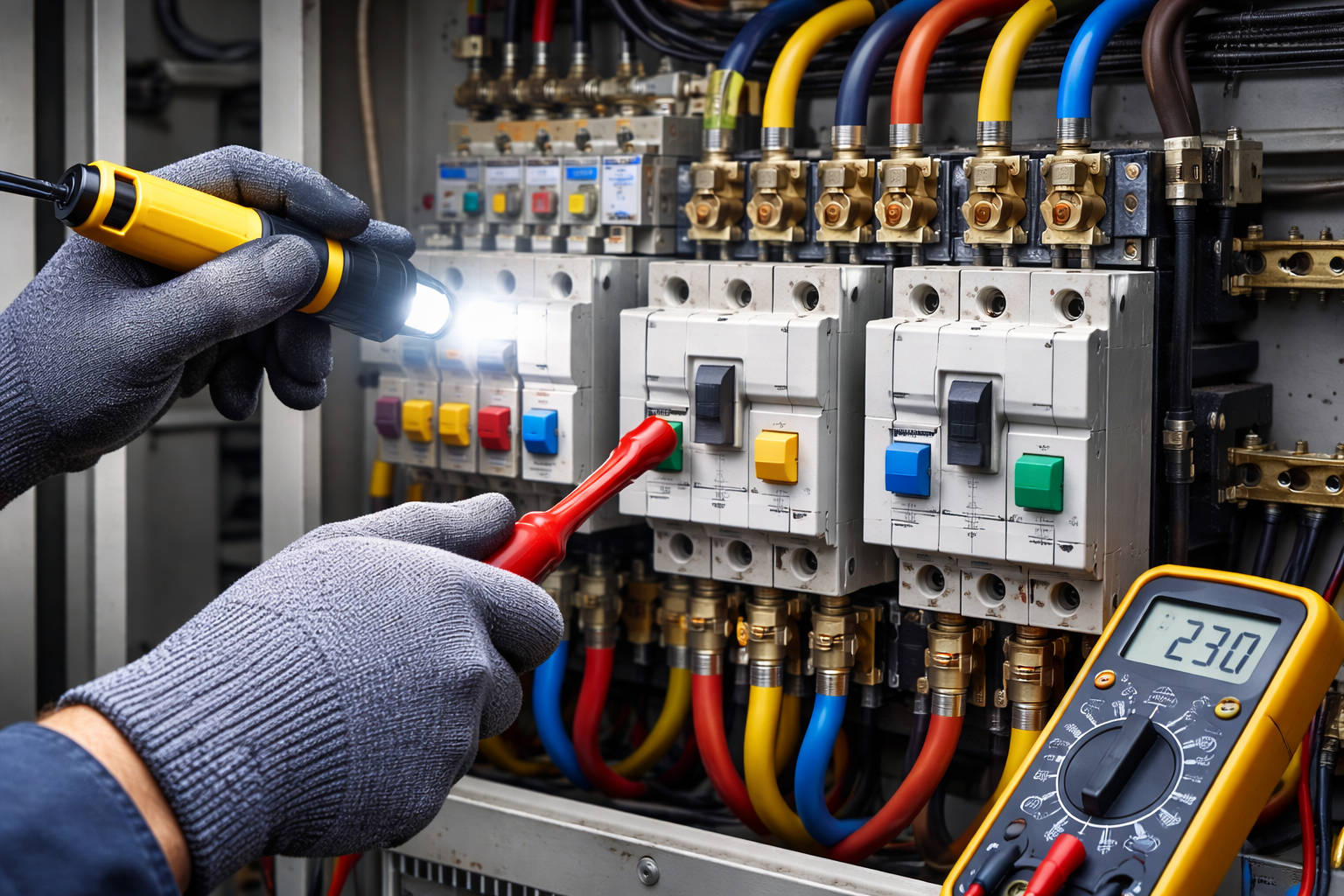
Never work inside the distribution board yourself unless you’re a qualified electrician. Even with the main switch off, parts of the board may still be energized from the utility supply.
Don’t overload circuits. Just because a breaker hasn’t tripped doesn’t mean you should keep adding more load. Respect the design limits.
Update labels when circuits change. Clear, accurate labeling makes troubleshooting easier and safer.
Choosing the Right Distribution Board
When selecting a distribution board for new construction or replacement, consider these factors:
Start with your current needs but plan for the future. That extra capacity costs relatively little now but provides valuable flexibility later.
Choose quality over price. A distribution board should last 20 to 30 years or more. Saving a few thousand rupees on a cheap board makes no sense over that timeframe.
Work with reputable brands that stand behind their products. Eurogrid’s reputation is built on distribution boards that perform reliably year after year, protecting homes and facilities across diverse applications.
Ensure compatibility with modern protection devices. Your distribution board should accommodate MCBs, RCCBs, surge protectors, and other devices you might need.
Consider the installation environment. Surface mount or flush mount? Standard enclosure or weatherproof? These decisions affect both appearance and functionality.
The Role of Professional Installation
Installing or upgrading a distribution board isn’t a DIY project. It requires:
- Understanding electrical codes and safety standards
- Ability to work safely with live mains voltage
- Knowledge of proper sizing and protection coordination
- Skills to terminate and test connections correctly
- Tools and equipment most homeowners don’t have
Hire qualified electricians with experience in residential electrical systems. Good electricians familiar with products from manufacturers like Eurogrid can recommend appropriate solutions and install them correctly.
The cost of professional installation is worthwhile insurance against fires, shocks, and equipment damage that improper installation might cause.
Final Thoughts
Your distribution board might not be the most glamorous part of your home, but it’s one of the most important. It’s where electricity becomes useful and safe, divided into manageable circuits that power modern life.
Understanding your distribution board helps you make informed decisions about electrical safety and upgrades. It helps you communicate effectively with electricians. And it helps you appreciate the engineering that goes into keeping your home powered safely.
Whether you’re building new, renovating, or simply maintaining your existing electrical system, giving your distribution board the attention it deserves pays dividends in safety, reliability, and peace of mind.
Choose quality components from trusted manufacturers like Eurogrid. Work with qualified professionals. And remember that the heart of your electrical system deserves the best protection you can provide.