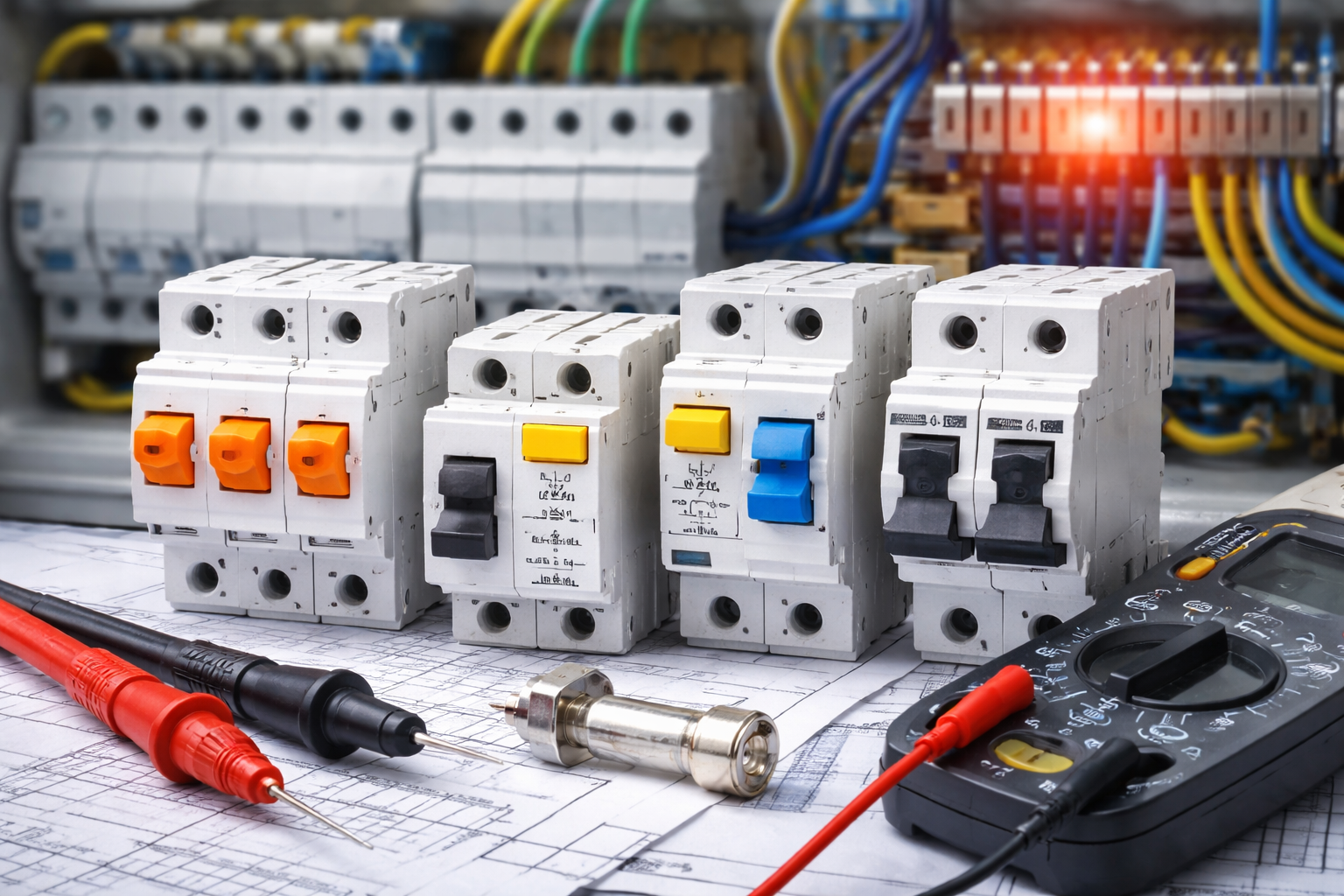
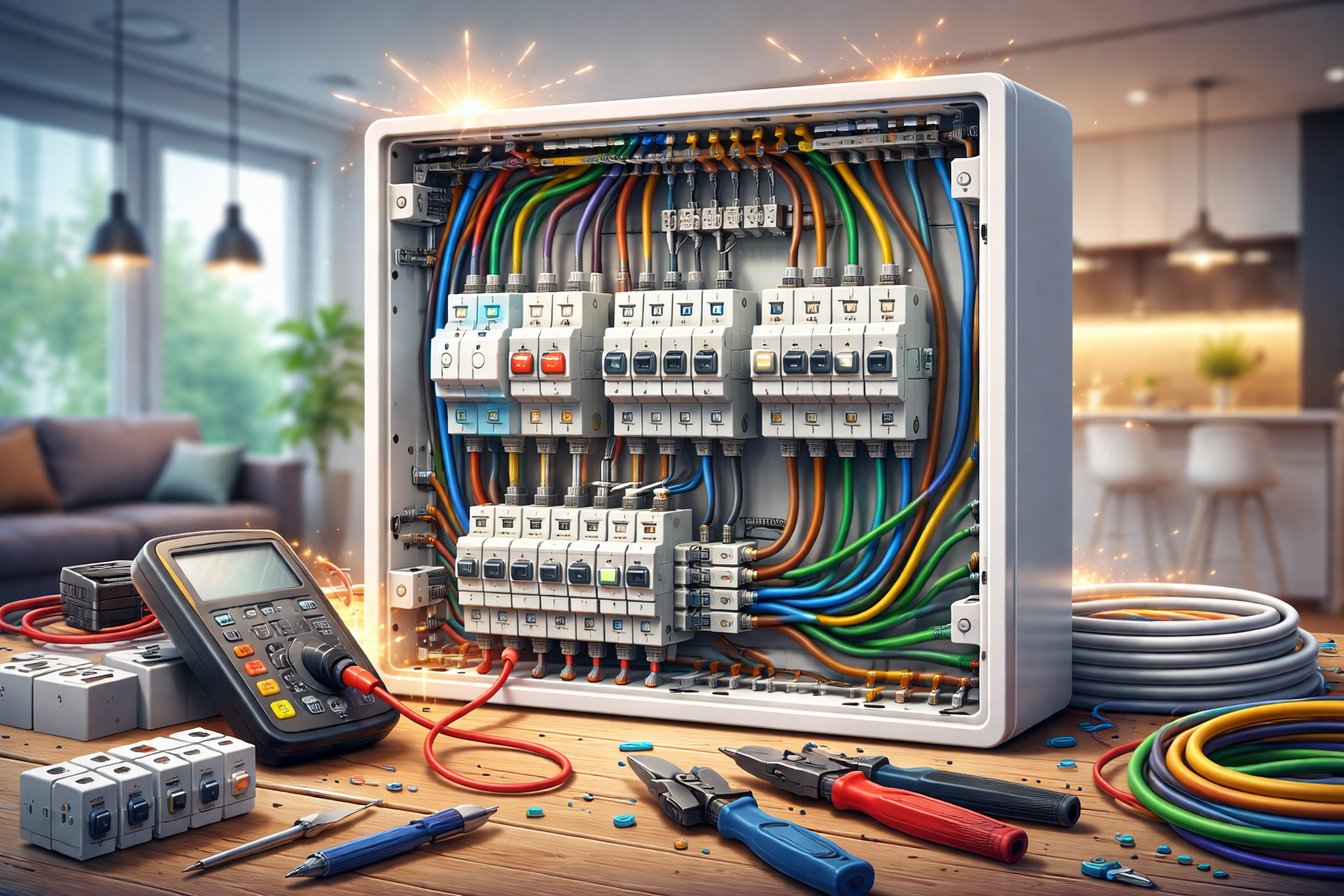
You’ve probably opened your electrical panel at some point and seen those rows of switches. Maybe one tripped during a power surge, or perhaps you’re renovating and need to understand what’s protecting your home’s electrical circuits.
Those switches are MCBs, or Miniature Circuit Breakers, and they’re one of the most important safety devices in your home. But here’s what most homeowners don’t realize: not all MCBs are created equal, and choosing the wrong one can leave your home inadequately protected.
Let’s walk through everything you need to know about selecting the right MCB for your home.
What Exactly Is an MCB?
An MCB is an automatic switch that protects electrical circuits from damage caused by overloads or short circuits. Think of it as a smart guardian that monitors the electricity flowing through your wires and cuts power instantly when something goes wrong.
Unlike old-style fuses that need replacing after they blow, an MCB can simply be reset with a flip of the switch once the problem is fixed. This makes them more convenient, more reliable, and safer for modern homes.
Every circuit in your home, whether it powers your air conditioner, your kitchen outlets, or your lighting, should have an MCB protecting it. When you’re using too many appliances at once or if there’s a wiring fault, the MCB trips before wires overheat or fires start.
Why Getting the Right MCB Matters
Installing the wrong MCB is surprisingly common, and it creates two possible problems. Both are bad.
If your MCB rating is too low, it’ll trip constantly, even during normal use. Imagine your circuit breaker tripping every time you turn on the microwave while the AC is running. Frustrating, right? That’s what happens when someone installs an MCB that can’t handle your actual power needs.
But here’s the more dangerous scenario: an MCB rated too high for your wiring. If your circuit can safely handle 16 amps but you install a 32-amp MCB, the breaker won’t trip even when your wires are overheating. The wires become the weak link, and that’s how electrical fires start.
This is why companies like Eurogrid focus so heavily on helping homeowners and electricians choose the correct MCB ratings. Getting it right isn’t just about convenience. It’s about safety.
Understanding MCB Ratings
Every MCB has a current rating stamped on it, usually something like 6A, 10A, 16A, 20A, 32A, or 40A. This number tells you the maximum current the MCB will allow to flow continuously without tripping.
But here’s what’s important: this rating needs to match your circuit, not just your appliances.
Your home’s wiring has limits based on wire thickness. Thinner wires can’t safely carry as much current as thicker ones. The MCB’s job is to protect those wires by tripping before they overheat.
A typical breakdown looks like this:
6A MCBs are usually for lighting circuits. Lights don’t draw much power, so a lower rating works fine.
10A to 16A MCBs protect general power outlets in bedrooms and living areas where you’ll plug in TVs, phone chargers, and similar devices.
20A to 32A MCBs handle heavy-duty circuits like air conditioners, geysers, washing machines, and kitchen appliances.
40A and above are for very high-load equipment or when multiple heavy appliances share a circuit.
When Eurogrid manufactures MCBs, they ensure each rating is precisely calibrated. A 16A MCB from a quality manufacturer will trip at the right threshold every single time. Cheap alternatives might be inconsistent, which defeats the entire purpose.
MCB Types: Knowing Your B, C, and D Curves
Here’s where it gets slightly technical, but stay with me because this matters.
MCBs come in different “types” labeled as B, C, or D. This refers to their tripping characteristics, specifically how they respond to sudden surges of current.
Type B MCBs trip when current reaches 3 to 5 times their rating. These are ideal for residential circuits with resistive loads like lighting, heaters, and most household outlets. If you’re protecting a bedroom or living room circuit, Type B is usually your choice.
Type C MCBs trip at 5 to 10 times their rating. They’re designed for circuits that experience small surges when motors start up. Think air conditioners, refrigerators, washing machines, and pumps. The slight delay prevents nuisance tripping when your AC compressor kicks in, but still provides protection against real faults.
Type D MCBs handle 10 to 20 times their rating before tripping. These are for circuits with very high inrush currents, like large motors or transformers. Most homes don’t need Type D MCBs, but they’re common in workshops or homes with specialized equipment.
For typical homes, you’ll mainly use Type B for lighting and general circuits, and Type C for appliance circuits. Eurogrid offers clear guidance on which type suits which application, taking the guesswork out of selection.
Pole Configuration: Single, Double, or Triple
MCBs also come in different pole configurations, which sounds complicated but is actually straightforward.
Single Pole MCBs protect one live wire. They’re used for lighting circuits and single-phase power outlets. This is the most common type you’ll see in residential panels.
Double Pole MCBs protect both live and neutral wires simultaneously. They’re required for certain appliances and are mandatory in some electrical codes for specific circuits. Many electricians prefer double pole MCBs for appliance circuits as an extra safety measure.
Triple Pole and Four Pole MCBs are for three-phase connections, which some larger homes or properties with heavy machinery might have. Most standard homes run on single-phase power and won’t need these.
When you’re replacing an MCB, make sure you match the pole configuration. Don’t try to swap a single pole for a double pole or vice versa without consulting an electrician.
Breaking Capacity: The Hidden Specification
Here’s something many homeowners overlook: breaking capacity, sometimes called short circuit capacity. It’s usually marked as a number followed by kA, like 6kA or 10kA.
This tells you the maximum fault current the MCB can safely interrupt. In simple terms, if there’s a massive short circuit, can your MCB handle breaking that current without being damaged or causing a hazard?
For most residential applications, 6kA is adequate. However, if you’re close to the main transformer or have a very robust power supply, 10kA provides extra security. Commercial and industrial settings often require even higher ratings.
Eurogrid’s residential MCBs typically offer 6kA or 10kA breaking capacity, which covers virtually all home scenarios. Using an MCB with insufficient breaking capacity is dangerous because it might fail catastrophically during a major fault.
Matching MCBs to Your Home’s Circuits
Let’s get practical. How do you actually choose the right MCB for each circuit?
Start with your wiring. The wire gauge determines the maximum safe current. In India, 1.5 sq mm wire safely carries about 10-13A, while 2.5 sq mm handles 16-20A, and 4 sq mm can manage 25-32A. Your MCB rating should not exceed what your wiring can handle.
Consider your loads. Add up the wattage of everything that might run simultaneously on that circuit. Divide by your voltage (230V in India) to get amperage. Your MCB should be rated just above this normal load but not excessively so.
Account for future needs. If you might add more appliances later, plan accordingly. But don’t massively oversize the MCB thinking you’re being safe. You’re actually creating a hazard.
Follow electrical codes. Local regulations often specify MCB requirements for different circuits. These aren’t arbitrary rules. They’re based on safety research and should be followed.
When working with Eurogrid MCBs, you’ll find they offer the full range of ratings and types needed for comprehensive home protection. Their technical specifications are clearly marked, making selection easier.
Special Considerations for Modern Homes
Today’s homes have electrical demands that didn’t exist a generation ago.
Electric vehicle chargers typically need dedicated 32A circuits with Type C MCBs. These are high-power devices that run for hours.
Solar panel systems require specific MCBs on both the generation and consumption sides. These need to be DC-rated if protecting the panel side, and properly sized for the system capacity.
Smart home systems don’t necessarily need special MCBs, but having clean, stable power helps them function better. Some homeowners install surge protection alongside their MCBs for sensitive electronics.
Home offices with computers, printers, and networking equipment benefit from properly sized circuits. A tripping MCB in the middle of a video call isn’t just annoying. It can affect your livelihood.
Eurogrid recognizes these evolving needs and designs MCBs that suit modern residential applications, from traditional circuits to contemporary requirements.
Common Mistakes to Avoid
Don’t reuse old MCBs in new installations. MCBs have a service life. If you’re renovating, invest in new protection devices.
Don’t buy based solely on price. Cheap MCBs might save you a few hundred rupees today but cost you thousands in damaged appliances or worse, create safety hazards. Quality matters enormously in electrical protection.
Don’t ignore nuisance tripping. If an MCB trips regularly, there’s a reason. It might be undersized, or there might be an actual electrical problem. Either way, investigate rather than just resetting it repeatedly.
Don’t mix brands randomly. While not strictly necessary to use one brand throughout, using quality products from reputable manufacturers like Eurogrid ensures consistency and reliability.
Never bypass or modify an MCB. Some people try to “fix” a tripping MCB by wedging it in the on position or tampering with it. This defeats its entire purpose and is extremely dangerous.
When to Call a Professional
Choosing and installing MCBs isn’t always a DIY job. You should definitely call a qualified electrician when:
- You’re unsure about wire gauges in your existing installation
- You’re adding new circuits or major appliances
- Your main distribution board needs upgrading
- MCBs trip frequently and you can’t identify why
- You’re dealing with three-phase power
- Local codes require licensed electricians for electrical work
A good electrician familiar with quality products like Eurogrid MCBs can assess your specific needs and ensure everything is installed correctly and safely.
The Eurogrid Advantage
When you’re investing in MCBs for your home, brand reputation matters. Eurogrid has built their name on reliable electrical protection products that perform consistently over years of service.
Their MCBs are manufactured to strict quality standards, tested thoroughly, and designed to provide dependable protection. The clear marking and documentation make selection easier for both homeowners and electricians.
More importantly, Eurogrid stands behind their products. When you choose their MCBs, you’re not just buying a device. You’re investing in proven reliability and the peace of mind that comes with it.
Making the Right Choice
Choosing the right MCB for your home comes down to understanding your circuits, knowing your loads, and selecting quality products that match your needs.
Don’t rush the decision. Take time to assess each circuit, verify wire gauges if possible, and consider both current and future requirements. When in doubt, consult with a qualified electrician who can evaluate your specific situation.
Remember that MCBs are safety devices first and foremost. Their job is to protect your home, your appliances, and most importantly, your family from electrical hazards. Investing in the right MCBs from trusted manufacturers like Eurogrid is one of the smartest decisions you can make for your home’s electrical system.
Your home’s electrical safety is too important to leave to chance. Choose wisely, install correctly, and rest easier knowing your circuits are properly protected.