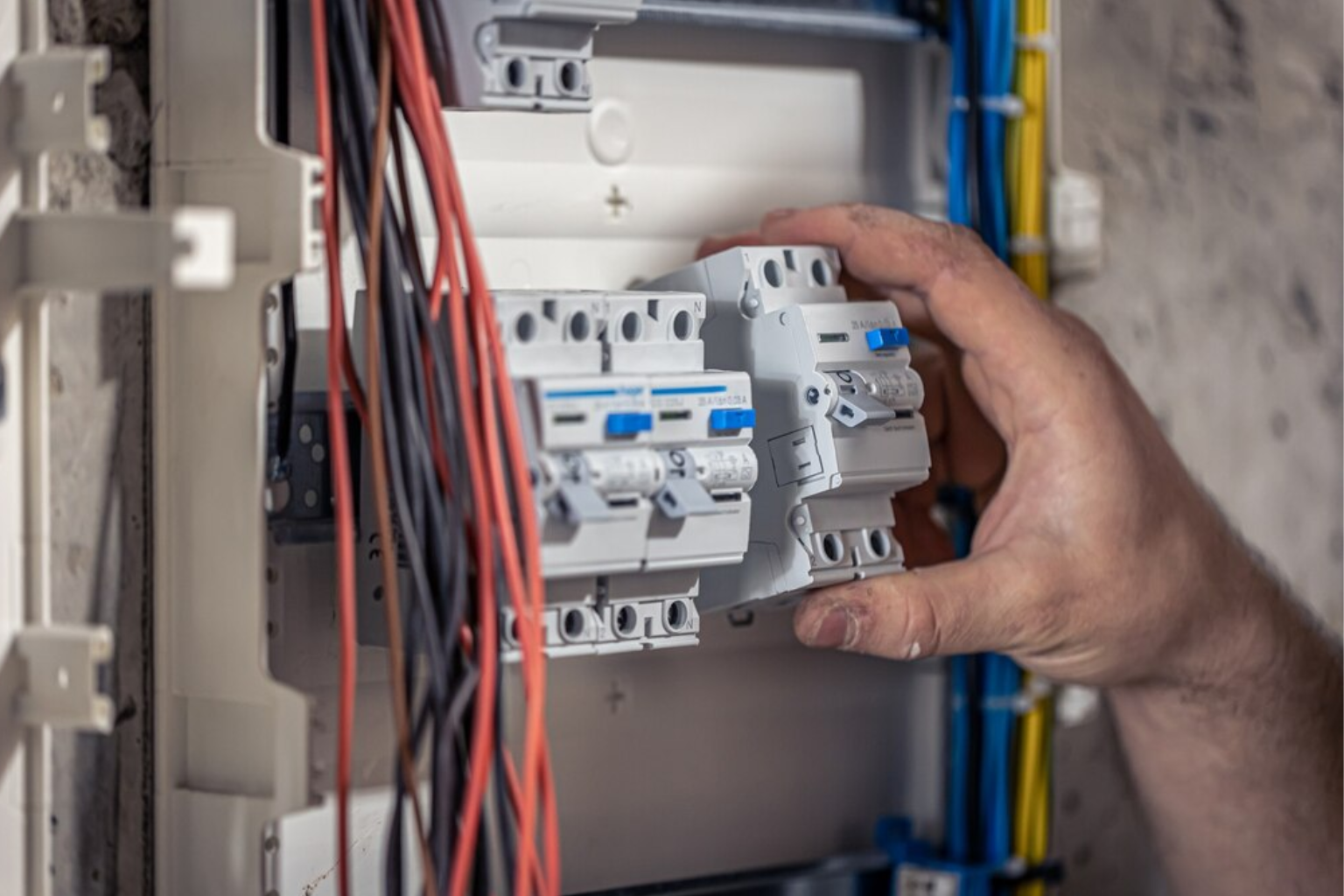
A flickering light or a tripped breaker may seem like a minor inconvenience, but it often raises a bigger question: is your electrical system adequately protected? One of the most important decisions in any electrical installation is selecting the right MCB (Miniature Circuit Breaker). While it may look like a small component inside your distribution board, it plays a critical role in protecting your wiring, appliances, and people from electrical hazards.
Choosing the wrong MCB rating can lead to frequent tripping, damaged equipment, overheating, or, in extreme cases, electrical fires. That’s why understanding how MCBs work and selecting the right rating for your home or office is essential for ensuring both safety and reliable performance.
What Is an MCB and Why Is It Important?
An MCB is a protective device that automatically cuts off the electrical store when it detects an overload or short circuit. Unlike traditional fuses, which must be returned after a fault, an MCB can simply be reset once the issue is resolved.
In everyday use, an MCB helps:
- Protect electrical wiring from overheating
- Prevent damage to connected appliances
- Reduce the risk of electrical fires
- Minimise downtime by allowing quick restoration after a fault
Whether it’s a residential apartment, an office, or a commercial building, MCBs form the first line of defence against electrical faults.
Why Choosing the Correct MCB Rating Matters
An MCB isn’t selected based on the size of the building. Its rating depends on the electrical load it needs to protect.
Here’s where many people make a mistake. Installing a higher-rated MCB doesn’t provide extra protection. In fact, it can do the opposite.
For example:
- An MCB with a rating that’s too low may trip frequently, even during normal usage.
- An MCB with a rating that’s too high may allow excessive current to flow before tripping, increasing the risk of overheating and damage.
The goal is to choose an MCB that matches both the electrical load and the wiring capacity.
Understanding MCB Ratings
An MCB rating indicates the maximum current it can safely carry under normal operating conditions before tripping during an overload.
Common ratings include:
- 6A
- 10A
- 16A
- 20A
- 25A
- 32A
- 40A
- 63A
Each rating is designed for specific applications based on power requirements.
Common MCB Ratings for Different Circuits
While every installation should be assessed individually, these are some commonly used ratings.
Lighting Circuits
Lighting circuits generally have lower power consumption.
Typical MCB rating:
- 6A or 10A
These ratings provide sufficient protection for lighting loads while preventing unnecessary tripping.
General Power Sockets
Wall sockets powering televisions, computers, chargers, and small appliances typically require:
- 16A or 20A MCB
This depends on the expected connected load and wiring size.
Kitchen Appliances
Appliances such as microwave ovens, electric kettles, dishwashers, and induction cooktops often draw higher current.
Suitable ratings may include:
- 20A
- 25A
- 32A
Each appliance should be evaluated based on its power consumption.
Air Conditioners
Air conditioners usually require dedicated circuits because of their higher starting current.
The MCB rating depends on:
- Cooling capacity
- Power consumption
- Manufacturer recommendations
A qualified electrician should calculate the appropriate rating.
Office Equipment
Modern offices often have:
- Computers
- Printers
- Servers
- Networking equipment
- UPS systems
Selecting the correct MCB ensures uninterrupted operation while protecting expensive electronics.
Factors to Consider Before Choosing an MCB
Choosing an MCB isn’t just about current rating. Several factors influence the right selection.
1. Total Electrical Load
Begin by calculating the total connected load on the circuit.
The current requirement can be estimated using:
Current (A) = Power (W) ÷ Voltage (V)
This calculation provides the starting point for selecting the correct MCB.
2. Wire Size
The MCB should always match the cable’s current-carrying capacity.
Here’s why this matters.
If the cable can safely carry only 16A but a 32A MCB is installed, the cable may overheat long before the breaker trips.
In our experience, proper coordination between wiring and protective devices is one of the most overlooked aspects of electrical safety.
3. Type of Load
Not every electrical device behaves the same way.
Some equipment, particularly motors and air conditioners, draws a much higher current during startup than during normal operation.
This is why selecting the correct tripping characteristics is equally important.
Understanding MCB Trip Curves
Apart from current ratings, MCBs are also classified by trip curves.
Type B MCB
Suitable for:
- Homes
- Residential lighting
- Small appliances
Trips quickly during fault conditions.
Type C MCB
Suitable for:
- Offices
- Commercial buildings
- Small motors
- Air conditioning systems
Handles moderate inrush current without nuisance tripping.
Type D MCB
Suitable for:
- Industrial machinery
- Heavy motors
- Transformers
Designed for equipment with high startup currents.
Selecting the right trip curve improves both safety and operational reliability.
Signs You May Have the Wrong MCB Rating
If your electrical system experiences any of the following, it’s worth having your installation inspected.
Frequent Tripping
This may indicate:
- Overloaded circuits
- Undersized MCB
- Faulty appliances
Warm Switchboards
Excessive heat may suggest:
- Loose connections
- Overloaded circuits
- Incorrect breaker selection
Burning Smell
Never ignore unusual smells near the distribution board.
They may indicate overheating or insulation damage.
Appliances Shutting Down Unexpectedly
Repeated power interruptions can affect sensitive electronics and reduce equipment lifespan.
Why Quality MCBs Matter
Not all MCBs are manufactured to the same standards.
A reliable MCB should provide:
- Accurate tripping characteristics
- High breaking capacity
- Durable construction
- Long service life
- Consistent performance under varying electrical conditions
Investing in quality electrical protection helps reduce maintenance issues and improves overall system reliability.
Professional Installation Makes a Difference
Although selecting an MCB may appear straightforward, proper installation requires technical expertise.
A qualified electrician considers:
- Connected load
- Future expansion
- Cable sizing
- Fault levels
- Applicable electrical standards
- Distribution board configuration
What most people don’t realise is that the MCB is only one part of a complete protection system. Proper coordination with RCCBs, distribution boards, earthing systems, and wiring is equally important for achieving a safe installation.
Build a Safer Electrical System
The right MCB does much more than stop a circuit during a fault. It protects your property, reduces the risk of electrical accidents, extends the life of your appliances, and keeps your electrical system operating reliably every day.
Whether you’re building a new home, renovating an office, or upgrading an existing electrical installation, choosing the appropriate MCB rating should never be guesswork.
At Eurogrid, we manufacture high-quality electrical protection solutions designed for dependable performance across residential, commercial, and industrial applications. With a priority on safety, durability, and quality engineering, our MCBs help create electrical systems that are built to perform reliably, even under demanding conditions.