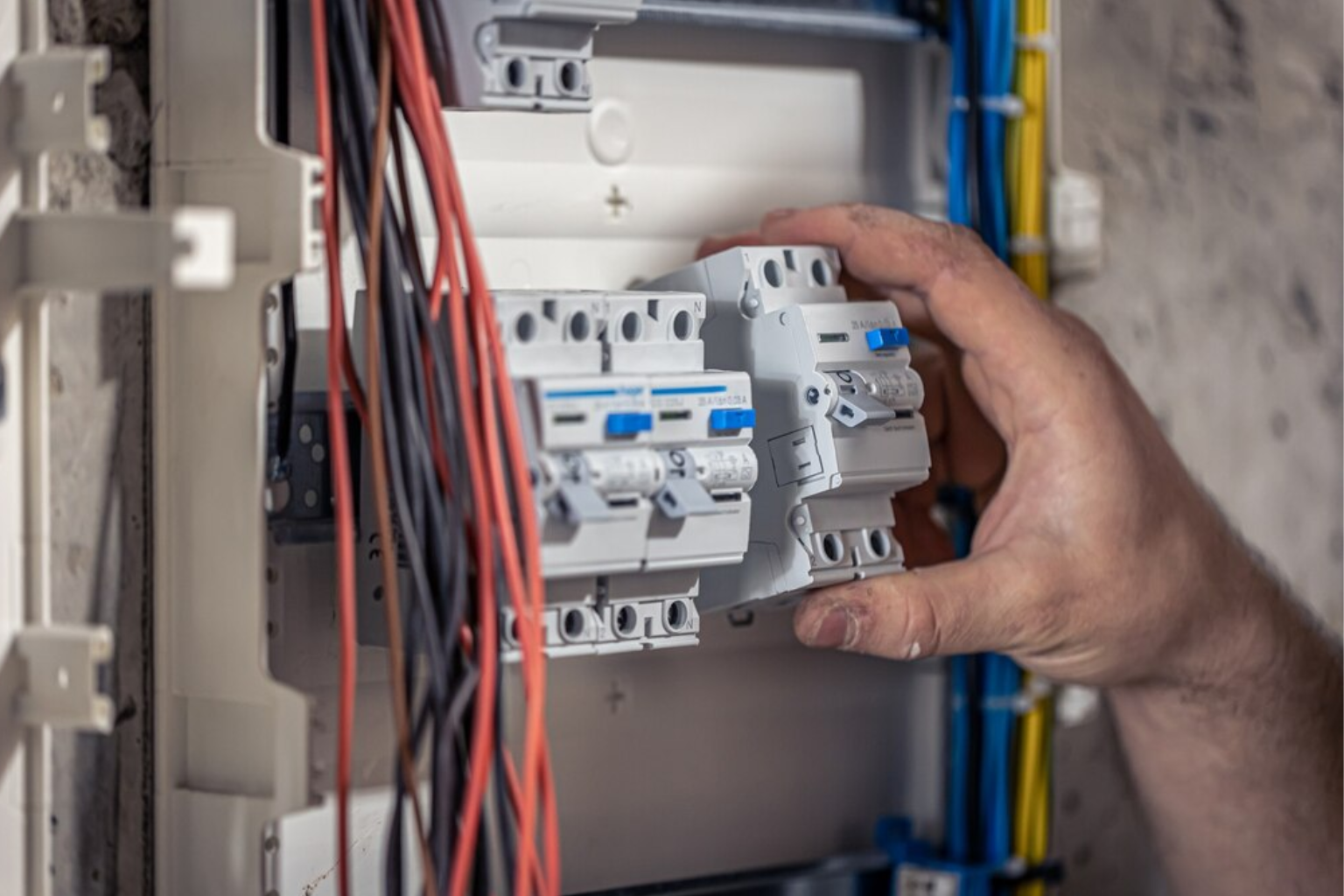
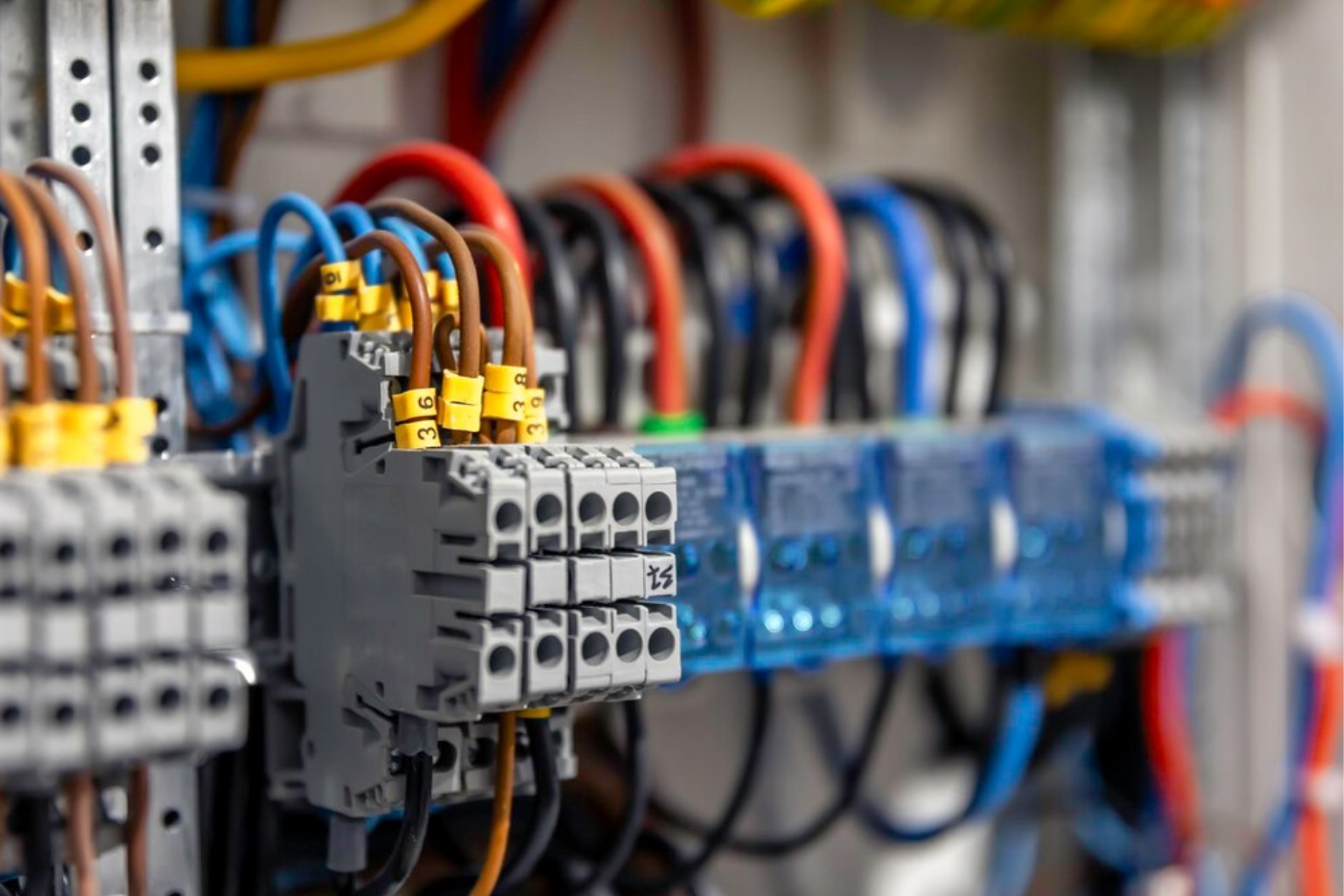
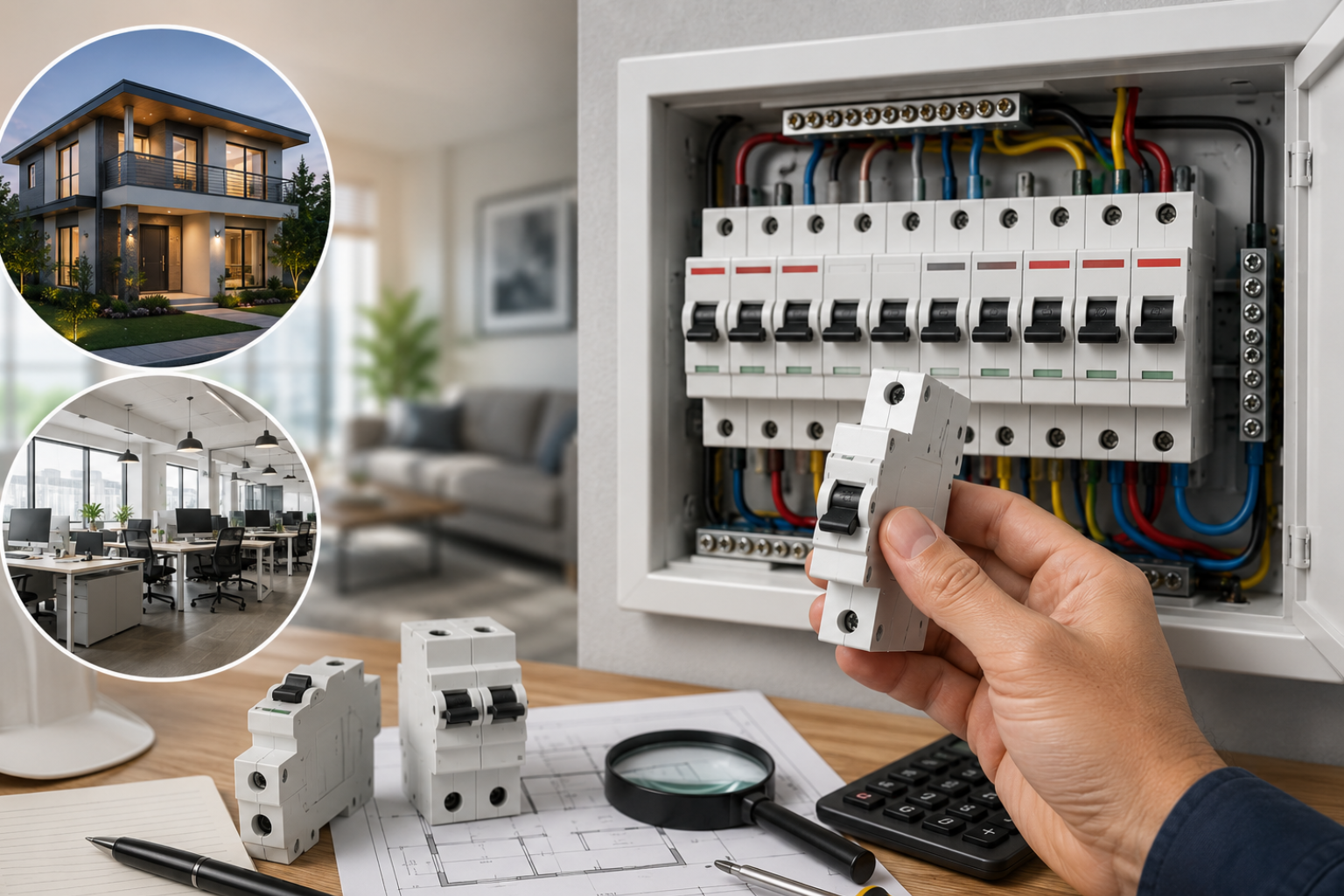
Walk into any large manufacturing unit, textile factory, or processing plant in India, and you’ll find someone who has a story about an unexpected electrical failure. A tripped breaker during peak production. A machine that wouldn’t start because the protection device was wrongly sized. Or worse — equipment damage that cost lakhs because the wrong circuit breaker was installed and didn’t respond the way it should have.
These aren’t freak incidents. They’re the predictable result of one decision made poorly at the planning stage: choosing the wrong circuit breaker for the application.
In industrial settings, that decision carries real weight. The right circuit breaker for industrial applications doesn’t just protect your equipment — it determines how reliably your entire operation runs.
Why Industrial Circuit Breaker Selection Is a Different Ball Game
Most people are familiar with the small MCBs in a home’s distribution board. You flip one back on after it trips, and life moves on.
Industrial environments are a completely different story.
Here, you’re dealing with heavy machinery, three-phase power systems, high fault currents, and loads that cycle on and off hundreds of times a day. The stakes of getting it wrong aren’t just a nuisance trip — they can mean damaged motors, unplanned downtime, or serious safety hazards on the shop floor.
What most plant managers and electrical engineers in India don’t realise is that the selection process for a circuit breaker for industrial applications is multi-dimensional. Current rating is just the starting point. The real work lies in understanding fault levels, load behaviour, coordination requirements, and the specific demands of your industry.
Start With Fault Level — Not Just Current Rating
This is where most selection mistakes happen.
The rated current of a circuit breaker tells you what load it can handle continuously. But the breaking capacity (measured in kA) tells you something far more critical: how much fault current it can safely interrupt without being destroyed in the process.
In Indian industrial facilities — especially those connected to HT/LT transformer substations — fault currents can be extremely high. A 1000 kVA transformer, for instance, can produce prospective fault currents of 25 kA or more at the LT bus. If your circuit breaker is only rated for 10 kA breaking capacity, it may not just fail to clear the fault — it can itself become a hazard, with arc flash, welded contacts, or catastrophic failure.
Before specifying any circuit breaker for industrial applications, get your system’s prospective short circuit current calculated. Then select a breaker with a rated breaking capacity (Icu or Ics) that comfortably exceeds that value. In most Indian industrial settings, 25 kA to 65 kA rated breakers are appropriate depending on proximity to the transformer and system size.
Understanding the Types of Industrial Circuit Breakers
The industrial market offers several categories, and each exists for good reason.
Moulded Case Circuit Breakers (MCCBs)
MCCBs are the backbone of industrial power distribution. They handle currents from around 16A all the way up to 1600A or more, and are built for the kind of abuse industrial environments routinely dish out — vibration, heat, and frequent operation.
They’re used in motor control centres (MCCs), distribution boards, and as feeder protection for sub-panels across a facility. When someone says “circuit breaker for industrial applications” in the context of Indian manufacturing, they’re usually talking about an MCCB.
MCCBs come with either thermal-magnetic trips (simpler, lower cost) or electronic trip units (more precise, more flexible). For critical applications where you need adjustable protection settings and better coordination, electronic trip units are worth the investment.
Air Circuit Breakers (ACBs)
ACBs sit at the top of the food chain in terms of capacity, typically handling 800A to 6300A and above. These are installed at the main incomer of large facilities — the point where power enters from the transformer or grid connection.
In addition to protection, ACBs often include metering, communication, and remote operation capabilities. They’re engineered for very long service lives and have arc quenching chambers that handle the extreme energy during interruption.
If you’re running a large plant, a steel facility, a data centre, or a hospital, ACBs are protecting your entire installation at the primary level.
Miniature Circuit Breakers (MCBs) in Industrial Settings
MCBs do have a role in industrial applications — typically for lighting circuits, control panels, and auxiliary circuits where currents are lower (up to 125A in industrial-grade versions). The key is selecting industrial-rated MCBs rather than residential ones, which are designed for different fault levels and operating conditions.
Load Characteristics Matter More Than People Realise
Here’s where things get interesting — and where purely following a datasheet can lead you astray.
Industrial loads don’t behave like resistive loads in a home. Motors, compressors, welding machines, and VFDs all have inrush currents that can be 5 to 10 times their running current. A 22 kW motor might draw 45A continuously, but at startup it can surge to 300A or more for several seconds.
This is where the tripping curve of the circuit breaker becomes critical.
Circuit breakers for motor protection need to tolerate that inrush without nuisance tripping, while still responding fast to genuine faults. In MCCBs, this is typically addressed through adjustable Ir (overload), Isd (short-time delay), and Ii (instantaneous) settings on the electronic trip unit.
For motor branch circuits specifically, many engineers in India prefer combining an MCCB with a separate overload relay rather than relying on the breaker alone — giving independent control over overload protection without affecting the upstream coordination.
The point is: match the protection to the load type, not just the load magnitude.
Selectivity and Coordination — The Often-Neglected Science
Imagine a fault in one corner of your factory tripping the main incomer and killing power to the entire plant. That’s a coordination failure, and it happens more often than it should.
Proper selectivity means that when a fault occurs, only the breaker closest to the fault should trip. Every upstream breaker should hold, maintaining power to the rest of the facility.
Achieving this requires careful time-current curve (TCC) coordination between all breakers in the hierarchy — from the ACB at the incomer, through the MCCBs in sub-distribution boards, down to the MCBs on individual circuits.
The trip settings, time delays, and breaking capacities at each level need to be engineered together — not selected in isolation. This is why major industrial electrical projects involve a proper protection coordination study, not just equipment procurement.
When specifying circuit breakers for industrial applications, always ask for the manufacturer’s TCC data. Reputable manufacturers like Eurogrid provide this documentation, making coordination work significantly easier for the design engineer.
Environment and Installation Conditions
India’s industrial geography is remarkably diverse — and your environment should shape your specification.
Temperature: In hot regions or non-air-conditioned switch rooms, ambient temperatures can routinely exceed 45°C. Most circuit breakers are rated at 40°C; operation above this requires derating. If you install a breaker rated for 100A and your switch room runs at 50°C, you may need to derate it to 80–85A effective capacity.
Dust, humidity, and corrosive atmospheres: Foundries, chemical plants, and coastal installations need enclosures with appropriate IP ratings. The breaker itself may be standard, but the enclosure protecting it needs to match the environment. Don’t install IP20-grade equipment in a dusty press shop and expect reliability.
Vibration: Heavy machinery produces significant vibration that can affect trip mechanisms over time. Breakers used near heavy presses or compressors should be vibration-rated.
Altitude: At altitudes above 2000 metres, air density decreases and affects arc quenching. High-altitude installations need breakers specifically rated or derated for those conditions.
These aren’t edge cases. In a country as varied as India — from Mumbai’s coastal humidity to Rajasthan’s heat to high-altitude installations in the North — environment is always a specification input, never an afterthought.
Standards Compliance — Non-Negotiable in India
For industrial installations in India, BIS certification and compliance with IS standards is the baseline, not a differentiator. IS/IEC 60947-2 covers MCCBs and ACBs; IS/IEC 60898 covers MCBs.
Beyond BIS, international certifications (CE, UL, KEMA) signal that a product has been tested under rigorous independent conditions. When procuring circuit breakers for critical industrial applications, always verify the certification scope — not just the presence of a certificate, but what exactly has been tested and to what standard.
At Eurogrid, every circuit protection product is built to meet applicable Indian and international standards, with traceable certifications. This isn’t just paperwork — it’s the foundation of trust when a protection device needs to perform under real fault conditions.
Making the Right Call
Choosing the right circuit breaker for industrial applications in India is ultimately an engineering decision that balances protection, performance, economics, and environment. There is no universal answer, and anyone offering one without understanding your specific system should be approached with caution.
The practical checklist:
- Determine your prospective fault current before choosing the breaking capacity
- Match the breaker type to your load type (motor loads, resistive loads, mixed)
- Plan for selectivity across your entire protection hierarchy
- Account for your operating environment and apply appropriate derating
- Verify certifications — and the scope of those certifications
- Work with manufacturers who provide full technical documentation and coordination support
If you’re specifying or upgrading protection for an industrial facility, it’s worth taking the time to get it right at the design stage. The cost difference between the right breaker and the wrong one is trivial compared to the cost of a fault, a fire, or an unplanned shutdown.
Eurogrid’s range of circuit protection devices — from MCBs to industrial-grade switchgear — is designed specifically to meet the demands of Indian industrial environments. If you’re working through a specification and need guidance on what works for your application, our team is ready to help you make the right call.