Every major electrical failure in an industrial facility has a story. And more often than not, when you trace it back to the source, it doesn’t start with a catastrophic event. It starts with something small, a connection that wasn’t torqued properly, a cable that was routed carelessly, a circuit that was sized for today’s load without any thought for tomorrow’s.
Wiring mistakes in industrial installations are rarely dramatic at the point they’re made. That’s what makes them dangerous. They sit quietly inside panels, conduits, and junction boxes until load increases, temperature rises, or vibration does its work. Then they announce themselves in the worst possible way.
This isn’t a beginner’s guide to wiring. This is a practical walkthrough for anyone responsible for specifying, supervising, or maintaining electrical installations in industrial environments and who wants to ensure the work holds up over years of real-world operation.
Why Industrial Wiring Demands a Different Level of Attention
Domestic and even commercial electrical installations are relatively forgiving. Loads are predictable, environments are controlled, and the consequences of minor errors, while never ideal, are usually contained.
Industrial environments are a different matter entirely. You’re dealing with heavy machinery that draws high starting currents, ambient temperatures that stress insulation, vibration that loosens connections over time, corrosive atmospheres in certain facilities, and continuous rather than intermittent operations.
A wiring mistake that might go unnoticed for years in an office building can cause equipment failure, production shutdowns, or worse within months in an industrial setting. The margin for error is genuinely smaller, and the stakes are genuinely higher.
Mistake #1: Using the Wrong Cable for the Environment
This is one of the most common wiring mistakes made during industrial installations, and it almost always comes down to cost-cutting at the specification stage.
Not all cables are created equal. Industrial environments require cables rated for the specific conditions they’ll operate in, temperature range, exposure to oils or chemicals, UV exposure in outdoor installations, mechanical stress in areas with moving equipment, and fire performance requirements in enclosed spaces.
Using a standard PVC-insulated cable in a high-temperature zone near furnaces or heavy machinery is a recipe for insulation degradation. Using a cable without adequate armouring in an area with mechanical traffic invites damage that may not be visible until the cable has already partially failed.
What most people don’t realise is that even the correct cable type, installed incorrectly, bent too sharply, pulled too tight, or run too close to heat sources, can behave like the wrong cable over time. Cable selection and cable installation are both part of getting this right.
Always specify cables against the actual operating conditions of each zone in your facility, not just the average conditions. The harshest 10% of your environment dictates what your cabling needs to handle.
Mistake #2, Poor Termination and Connection Work
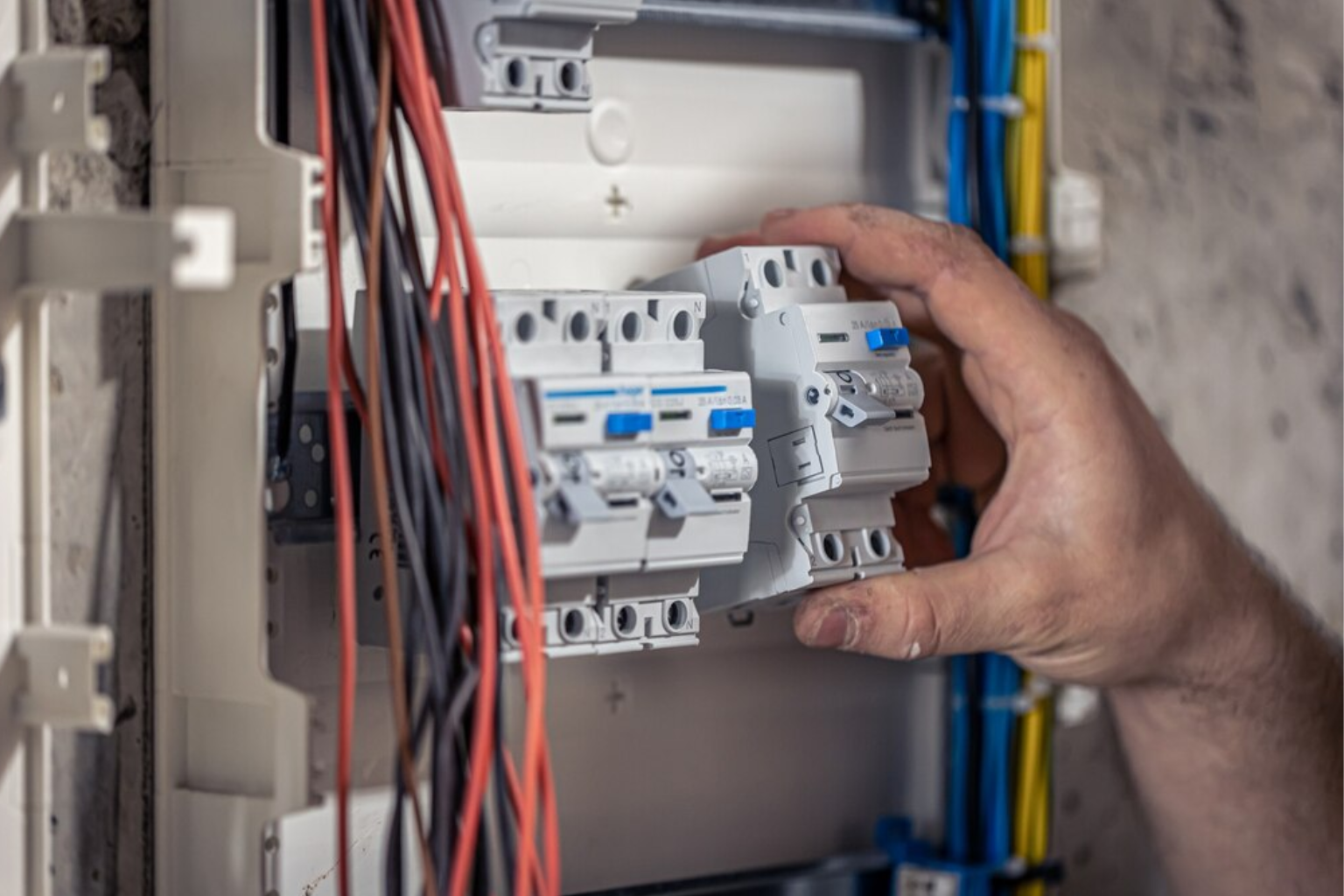
If there’s one area where wiring mistakes cause the most long-term damage in industrial installations, it’s terminations.
A loose terminal connection creates resistance. Resistance creates heat. Heat accelerates insulation breakdown, causing the connection to loosen further. Left unaddressed, this cycle leads to arcing, equipment damage, and in serious cases, electrical fires.
The problem is that poor terminations often pass initial inspection. The connection looks fine. It tests fine. It’s only under sustained load, especially the kind of cyclic loading that industrial machinery generates, that the weakness reveals itself.
Here’s where things get interesting: over-tightening is just as problematic as under-tightening. Crushing a stranded conductor by over-torquing a terminal damages the individual strands and actually reduces the effective cross-section of the connection. Every terminal has a manufacturer-specified torque value. Use a calibrated torque screwdriver. Record the values. Don’t rely on feel.
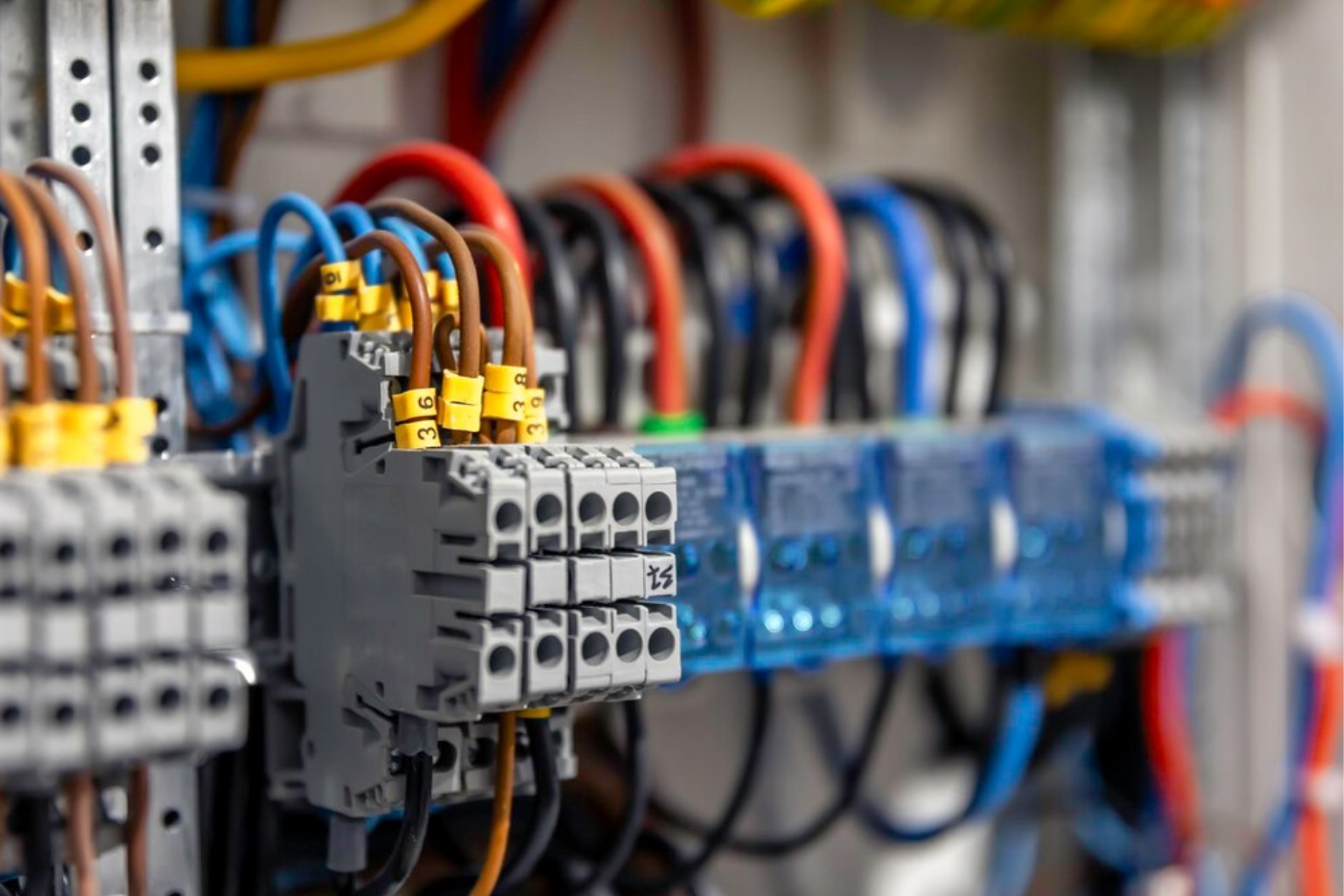
Ferrules deserve a specific mention here. For stranded conductors terminating into screw terminals, which describe the majority of industrial control wiring, unferruled conductors are among the most persistent wiring mistakes in the industry. Individual strands escape the terminal over time, reducing contact area and creating the exact resistance-and-heat problem described above. Crimp the correct ferrule onto every stranded conductor before it goes into a terminal. It takes seconds, and it matters enormously.
Mistake #3: Ignoring Load Growth in Circuit Design
Industrial facilities change. New machines get added. Processes get upgraded. Production capacity expands. A circuit that was correctly sized at installation becomes undersized 18 months later, and nobody updates the documentation to reflect it.
This is one of the wiring mistakes that facility managers inherit rather than make themselves. But inheriting a problem doesn’t reduce its consequences.
Conductors operating at or above their rated capacity continuously operate at elevated temperatures. This accelerates insulation ageing, increases the risk of nuisance tripping of protection devices, and, in the worst cases, leads to thermal damage to cables and connected equipment.
When specifying new industrial installations, build in headroom. A circuit sized at 80% of conductor capacity, rather than 95%, costs marginally more upfront and pays that difference back many times over through an extended lifespan and greater operational flexibility. When auditing existing installations, identify circuits that are regularly running near capacity and address them before expansion makes the situation critical.
Mistake #4, Inadequate Segregation of Cable Types
Power cables, control cables, instrument cables, and data cables each behave differently and can affect one another when run in close proximity. Running them together, which happens frequently when installers are trying to use existing cable trays or conduits, introduces interference problems that can be genuinely difficult to diagnose after the fact.
High-current power cables generate electromagnetic fields that induce noise into adjacent signal cables. This causes erratic behaviour in instrumentation and control systems, readings that drift, signals that trigger incorrectly, and communication errors in networked equipment.
The rule is straightforward but consistently violated: segregate by cable type, maintain appropriate separation distances as specified in installation standards, and where cables of different types must cross, do so at right angles to minimise inductive coupling. Use separate cable trays or dedicated conduits for power, control, and instrumentation runs wherever possible.
Mistake #5, Skipping or Shortcutting Earthing
Ask any experienced electrical engineer what single wiring mistake has the most serious safety implications in industrial installations, and earthing failures will come up immediately.
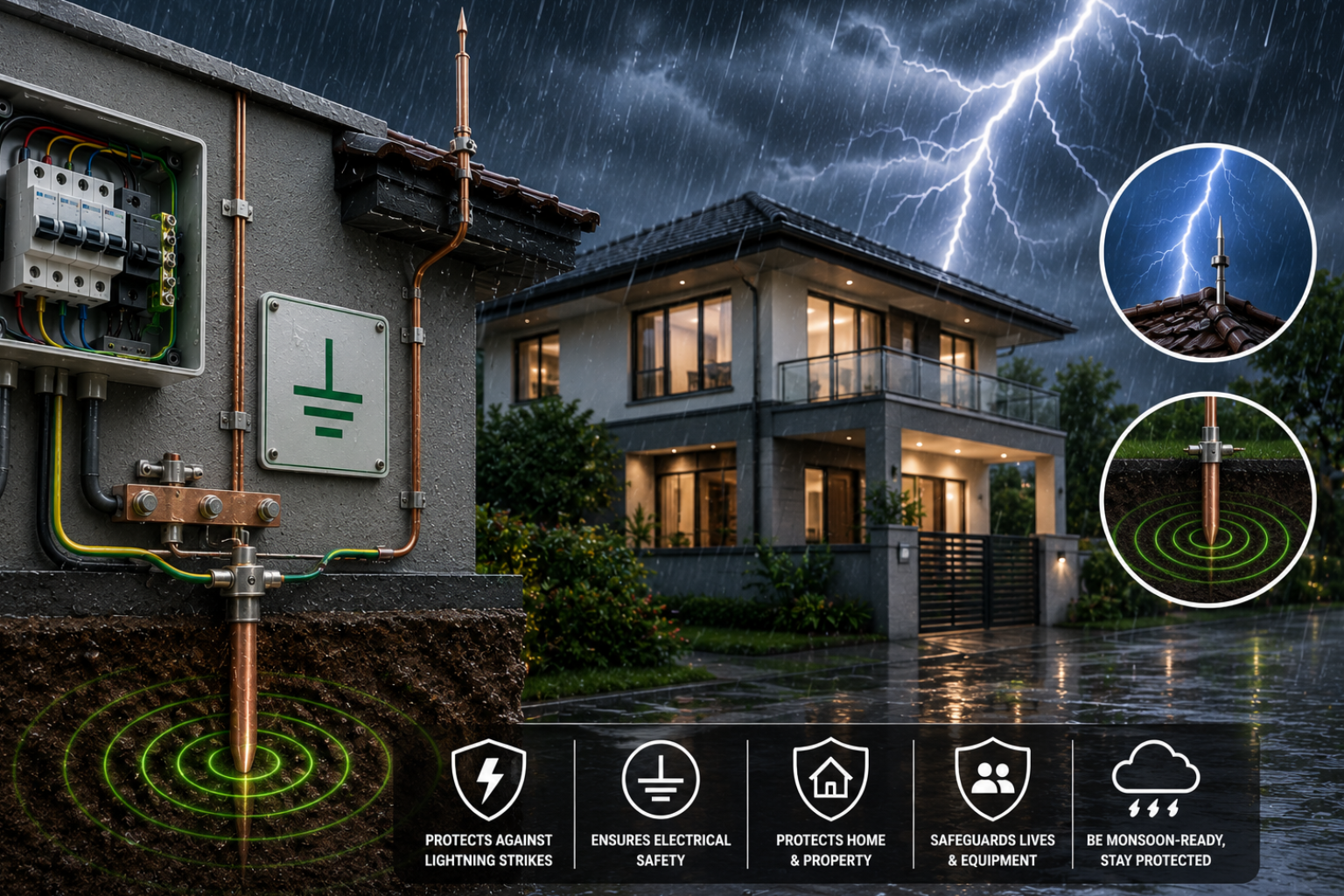
Proper earthing isn’t just a regulatory requirement; it’s the mechanism by which fault currents are safely diverted, protection devices are given the fault current they need to operate correctly, and people are protected from electric shock when equipment develops a fault.
Common earthing mistakes in industrial wiring include relying on conduit or cable armour as the sole earthing conductor (it isn’t reliable enough), using undersized earthing conductors to save money, creating earth loops that introduce noise into sensitive systems, and failing to bond all metalwork in a zone to a common earth potential.
Eurogrid’s range of earthing and lightning protection accessories exists precisely because proper earthing requires the right components, not improvised solutions. In industrial installations, the earthing system is not the place to cut corners.
Mistake #6: No Protection Against Mechanical Damage
Cables in industrial environments face physical hazards that simply don’t exist in other settings. Forklift traffic. Falling objects. Foot traffic in cable management areas. Vibration from heavy machinery. Thermal expansion and contraction of structures to which the cables are attached.
Wiring mistakes related to mechanical protection usually appear adequate at installation time and fail when the facility’s operational reality asserts itself. A cable that was neatly routed during a quiet fit-out becomes a target for damage once production equipment is moving around it.
Use conduit or cable ducting in areas with physical exposure. Use appropriate gland entries into enclosures that provide strain relief and environmental sealing. Allow for thermal movement in long cable runs rather than pulling cables taut. And revisit cable routes after full operations begin, the real traffic patterns of a working facility often differ from what was anticipated on a drawing.
Mistake #7, Documentation That Doesn’t Survive First Contact with Reality
This one isn’t about physical wiring at all, but in our experience, it causes as many problems as any of the above.
Industrial installations generate significant documentation: single-line diagrams, panel schedules, cable schedules, loop diagrams, and earthing layout drawings. These documents are created during installation and are often accurate at that point. Then the facility starts operating, modifications get made, and the documentation doesn’t keep up.
Two years later, when something fails and needs to be diagnosed quickly, the person troubleshooting is working from drawings that may not reflect what’s actually installed. This slows fault diagnosis, increases the risk of mistakes during repair, and makes the original wiring mistakes harder to identify and fix.
Treat electrical documentation as a living asset. Every modification, however minor, should be reflected in the updated drawings. The cost of keeping documentation current is trivial compared to the cost of troubleshooting from inaccurate records during a production stoppage.
The Common Thread
Look across all of these wiring mistakes and a pattern emerges: most of them aren’t the result of ignorance. They’re the result of shortcuts taken under time pressure, cost decisions made without fully considering long-term consequences, and the natural tendency to treat installation as a one-time event rather than as the foundation of a system that needs to perform reliably for years.
Industrial electrical installations deserve a level of care and discipline that matches the demands of the environment they serve. That means proper cable selection, precise termination, correctly designed circuits with built-in headroom, disciplined cable segregation, thorough earthing, genuine mechanical protection, and documentation that actually reflects what’s installed.
When those elements come together and are supported by high-quality components built for industrial demands, the result is an installation that performs reliably, remains safe, and doesn’t quietly accumulate problems that announce themselves at the worst possible time.
If you’re reviewing an existing installation or specifying a new one, Eurogrid’s range of cables, earthing accessories, circuit protection devices, and industrial switchgear is engineered to support installations that are done right from the start. Explore the range at eurogridelectricals.com, or get in touch to discuss what your specific installation requires.