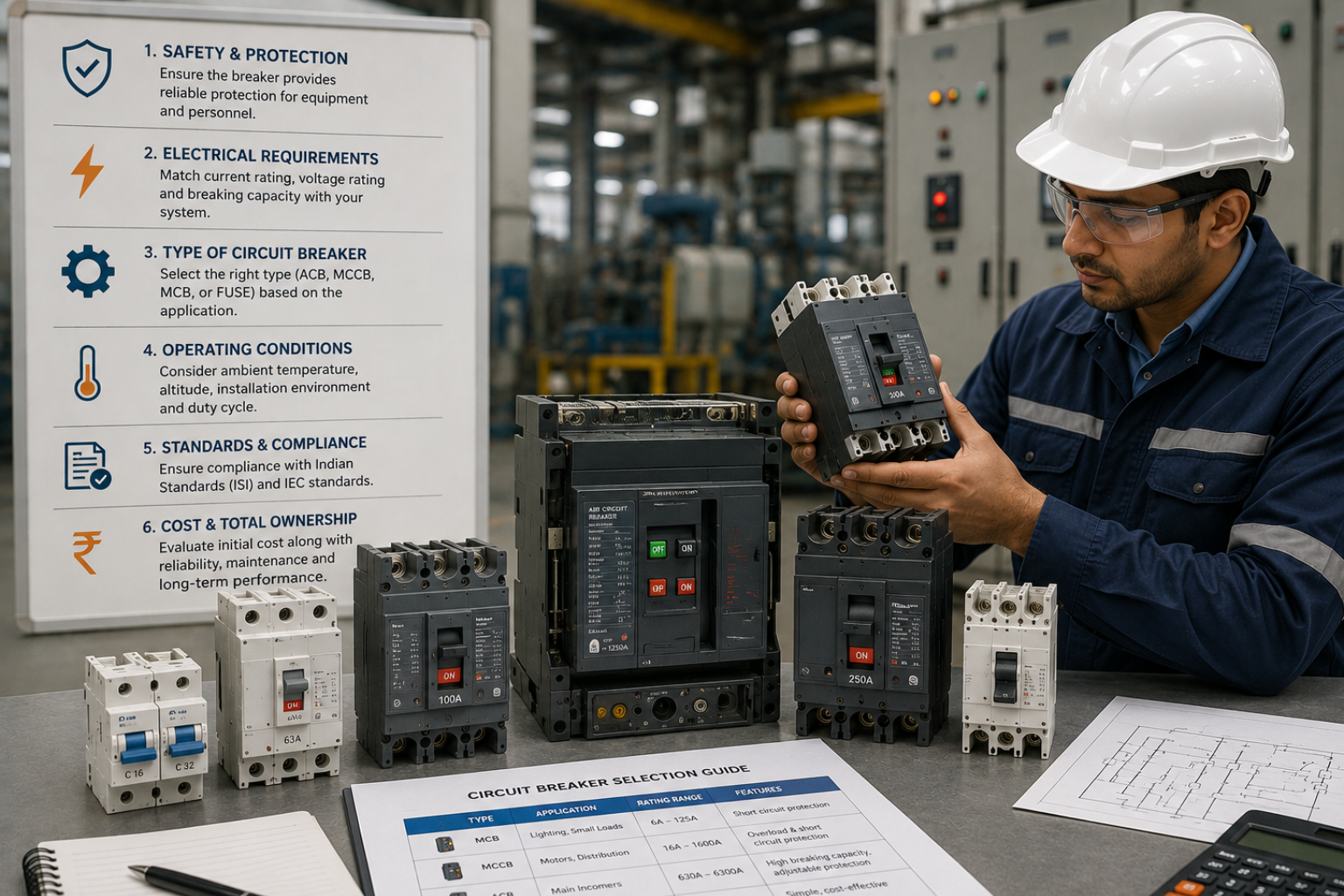
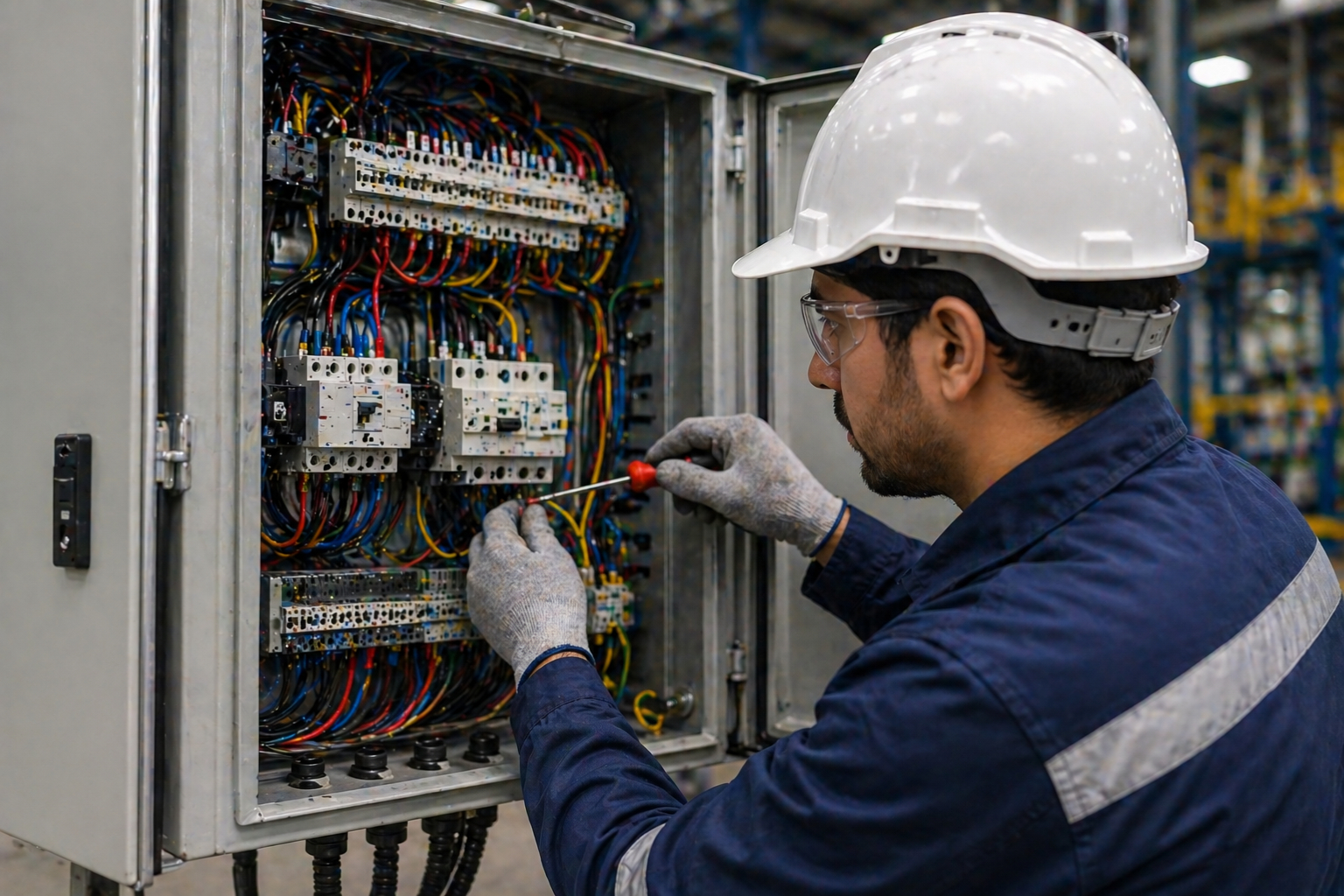
A production line goes down at 2 AM. Not because of a power cut, not because a machine failed, but because a switchgear panel that hadn’t been inspected in over a year finally gave up under load. The breaker didn’t trip when it should have; it just stopped responding. By the time the maintenance team traced the fault, four hours of production had been lost, along with a fairly expensive repair bill that a basic inspection schedule would have prevented entirely.
This is the story behind most unplanned switchgear failures. It’s rarely a manufacturing defect. It’s almost always neglect , dust, loose connections, moisture, or heat that quietly built up over months while everyone assumed the panel was “fine” because nothing had gone wrong yet. Industrial Switchgear doesn’t fail without warning; it fails without attention.
Why Industrial Switchgear Fails Long Before Anyone Notices
Here’s where things get interesting: switchgear failure is almost never sudden. What looks like a random breakdown is usually the final stage of a slow process , a connection that’s been loosening for months, a contact surface that’s been oxidising, or a cooling vent that’s been collecting dust since the last shutdown. By the time you see smoke, a tripped main, or a burning smell, the underlying damage has already been progressing for weeks.
What most people don’t realise is that Industrial Switchgear operates under constant thermal and mechanical stress, even when everything seems normal. Every load cycle creates minor expansion and contraction at connection points. Over time, this loosens bolted joints, increases contact resistance, and generates localised heating , a process that’s invisible until it isn’t.
The Real Cost of Treating Switchgear as “Install and Forget”
In our experience, the biggest driver of premature switchgear failure isn’t poor equipment quality; it’s the assumption that once a panel is commissioned, it doesn’t need attention until something goes wrong. That mindset works fine for years, right up until it doesn’t, and the cost of a reactive fix is almost always higher than the cost of prevention: unplanned downtime, emergency callouts, damaged downstream equipment, and, in worse cases, safety incidents that a routine check would have flagged early.
Switchgear protects everything downstream of it. When it’s neglected, the risk isn’t contained to the panel itself; it extends to every motor, machine, and process connected to that distribution point.
Building a Maintenance Routine That Actually Works
Visual and Thermal Inspections
A basic visual inspection, checking for discolouration, corrosion, signs of arcing, or insulation damage, should happen far more often than most facilities schedule it. But visual checks alone won’t catch heat buildup at connection points before it becomes a problem. This is where thermal imaging earns its place: an infrared scan during normal operation can flag a hot joint weeks before it would ever show a visible symptom, giving your team time to fix it during planned downtime instead of an emergency shutdown.
Tightening Connections and Checking Busbars
Loose connections are, by a wide margin, the most common root cause of switchgear failures. Vibration, thermal cycling, and time all work against bolted joints. Periodic torque checks on busbar connections and terminal points catch this before resistance heating turns a minor looseness into a major fault. It’s a simple task, but it’s the one most frequently skipped because it doesn’t feel urgent, until it is.
Testing Trip Mechanisms, Not Just Looking at Them
A breaker that looks perfectly fine can still fail to trip when it actually matters. Mechanical trip testing, physically verifying that protection devices operate within their rated response time, is non-negotiable for Industrial Switchgear used in critical applications. A panel that “passes” a visual inspection but hasn’t had its trip mechanism tested in years is offering the illusion of protection, not the real thing.
Cleaning, Ventilation and Dust Control
Dust isn’t just cosmetic. Accumulated dust inside a panel reduces insulation resistance, traps heat, and, in humid or industrial environments, can even create conductive paths over time. Keeping ventilation paths clear and scheduling interior cleaning, done with the panel properly isolated, of course, does more for switchgear longevity than people tend to credit.
Environmental Factors That Shorten Switchgear Life
Not every facility puts the same stress on its switchgear. Coastal humidity accelerates corrosion. Textile and cement plants generate fine particulate matter that infiltrates enclosures faster than standard schedules account for. High-vibration environments near heavy machinery loosen connections faster than a typical maintenance interval would allow. A maintenance routine copied from a generic checklist rarely accounts for these realities, which is why effective programs are built around the specific environment in which the panel operates, not a one-size-fits-all calendar.
Signs Your Industrial Switchgear Needs Attention Now
A few warning signs are worth treating as immediate priorities rather than waiting for the next scheduled check:
- Discolouration or a burnt smell near connection points or enclosure surfaces.
- Unusual humming or buzzing that wasn’t present before, often indicating a loose connection arcing under load.
- Nuisance tripping that has no obvious load-related explanation.
- Visible corrosion on busbars, terminals, or enclosure hardware, especially in humid environments.
- Panels that feel warmer than usual to the touch near the enclosure surface can indicate internal heat buildup.
Any one of these is reason enough to schedule an inspection rather than waiting for the next routine date on the calendar.
Building Maintenance Into Procurement, Not Just Operations
There’s a piece of this conversation that often gets missed: the maintenance burden actually starts at the procurement stage. Switchgear built with quality components, proper thermal margins, and accessible enclosure design is genuinely easier to maintain and tends to age more predictably than equipment chosen purely on upfront cost. A panel that’s difficult to inspect or service ends up being inspected and serviced less often, not because the maintenance team doesn’t care, but because the design works against them.
Protecting the Investment, Not Just the Panel
Industrial Switchgear is one of those assets that quietly rewards attention and loudly punishes neglect. A consistent inspection routine, thermal scans, connection checks, trip testing, and environment-aware cleaning cost a fraction of what a single unplanned breakdown does, in both downtime and risk.
If your facility’s maintenance schedule has been more reactive than planned, or if you’re evaluating switchgear for a new installation and want equipment that’s actually built to be maintained rather than just installed, it’s worth a closer look at what’s protecting your power distribution today. Eurogrid‘s range of industrial switchgear is engineered with exactly this in mind: reliable under load, accessible for inspection, and built to withstand demanding industrial environments. Browse the range, or get in touch with the team to talk through what your setup needs.