Most electrical fires don’t start with sparks or explosions.
They start quietly, inside cables, terminals, and panels that are technically working but operating just beyond safe limits.
In our experience, this is where most facilities go wrong. The system looks fine. The load seems manageable. Nothing trips. And then one day, insulation fails, a terminal overheats, or a surge takes out critical equipment.
Circuit protection devices are designed to prevent these “silent failures.” But only when they are selected, coordinated, and applied correctly.
This article goes beyond definitions to explain why circuit protection devices matter, how they prevent real-world failures, where they are commonly misused, and how to make smarter protection decisions, especially in commercial and industrial environments.
Throughout this guide, we’ll also discuss how manufacturers like Eurogrid approach circuit protection from a system-reliability perspective, not just at the component level.
The Real Reason Electrical Fires Happen (And It’s Not What Most People Think)
A common misconception is that electrical fires are caused by sudden faults. In reality, most fires are caused by long-term electrical stress.
We’ve seen fires caused by:
- Circuits operating at 110–120% load for months
- Poorly coordinated breakers that didn’t trip when they should have
- Minor insulation damage that created heat, not enough current to trip
- Voltage surges that weakened electronics over time
The danger isn’t electricity, it’s uncontrolled electricity.
Circuit protection devices are designed to control how electricity behaves when conditions are no longer ideal.
Circuit Protection Devices: What Actually Matters (Beyond the Textbook Definition)
At a basic level, circuit protection devices interrupt current during abnormal conditions.
But the real value lies in how fast, how selectively, and under what conditions they do this.
What matters in practice:
- Response time – milliseconds can mean the difference between a safe trip and permanent damage
- Trip accuracy – nuisance trips are bad; missed trips are worse
- Energy limitation – reducing let-through energy during faults
- Coordination – ensuring only the faulty section disconnects
This is where experienced manufacturers and system designers separate themselves from catalogue-based installations.
How Circuit Protection Devices Prevent Fires (The Chain Reaction They Stop)
Electrical fires follow a predictable chain:
- Abnormal current or voltage
- Heat buildup at conductors or joints
- Insulation degradation
- Arcing or ignition
- Fire spread
Circuit protection devices are designed to break this chain early, before heat becomes destructive.
The key is interrupting energy, not just current.
Eurogrid’s approach to circuit protection focuses heavily on:
- Consistent tripping behaviour
- Thermal stability under load
- High fault interruption reliability
Because a breaker that trips sometimes is worse than one that never trips.
The Protection Devices That Matter, and Why
1. Fuses: Still Relevant, Still Powerful
Fuses are often dismissed as outdated. That’s a mistake.
In our experience, fuses excel where:
- Fault levels are extremely high
- Fast, predictable interruption is critical
- Selectivity must be absolute
They limit fault energy exceptionally well, often better than breakers.
Where they fail:
- Poor replacement practices
- Wrong fuse curves selected
- Lack of monitoring
Fuses don’t forgive mistakes, but when applied correctly, they are among the safest protection devices available.
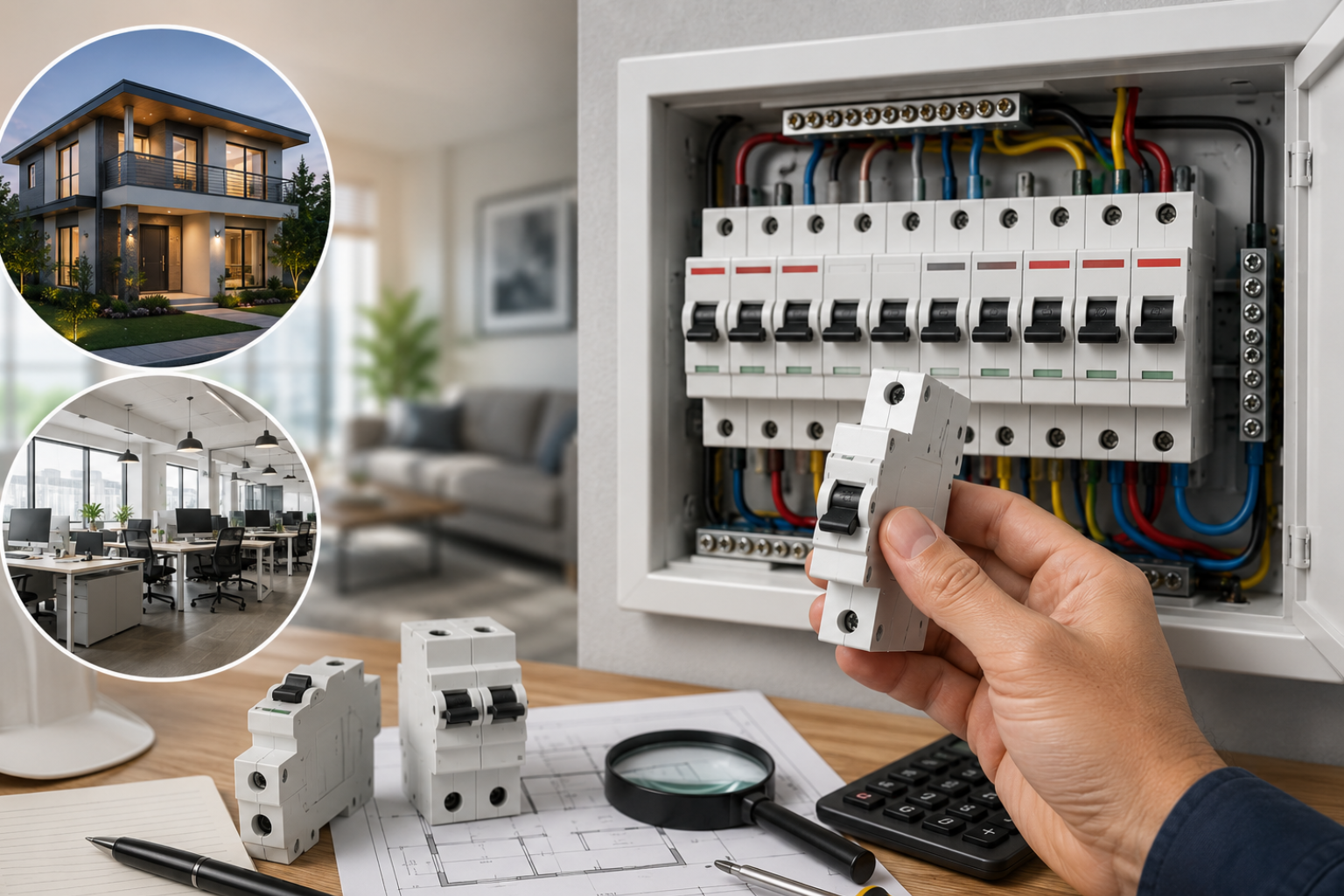
2. Miniature Circuit Breakers (MCBs): Convenience Meets Precision
MCBs dominate residential and light-commercial installations for a good reason.
What actually makes a good MCB:
- Accurate thermal calibration
- Strong magnetic trip response
- Stable performance across temperature variations
We’ve seen poorly manufactured MCBs delay tripping just enough to damage wiring without ever visibly “failing.”
Eurogrid MCBs are designed to maintain trip integrity over time, not just when new.
3. MCCBs: Where Most Protection Failures Are Design Errors
Moulded Case Circuit Breakers are often blamed when systems fail, but the real issue is usually incorrect settings.
Common MCCB mistakes we’ve seen:
- Trip settings copied from old drawings
- No coordination study
- Oversized breakers to “avoid tripping”
This defeats the entire purpose of protection.
When properly configured, MCCBs:
- Prevent feeder fires
- Protect motors and transformers
- Reduce mechanical and thermal stress
Protection isn’t about avoiding trips; it’s about tripping correctly.
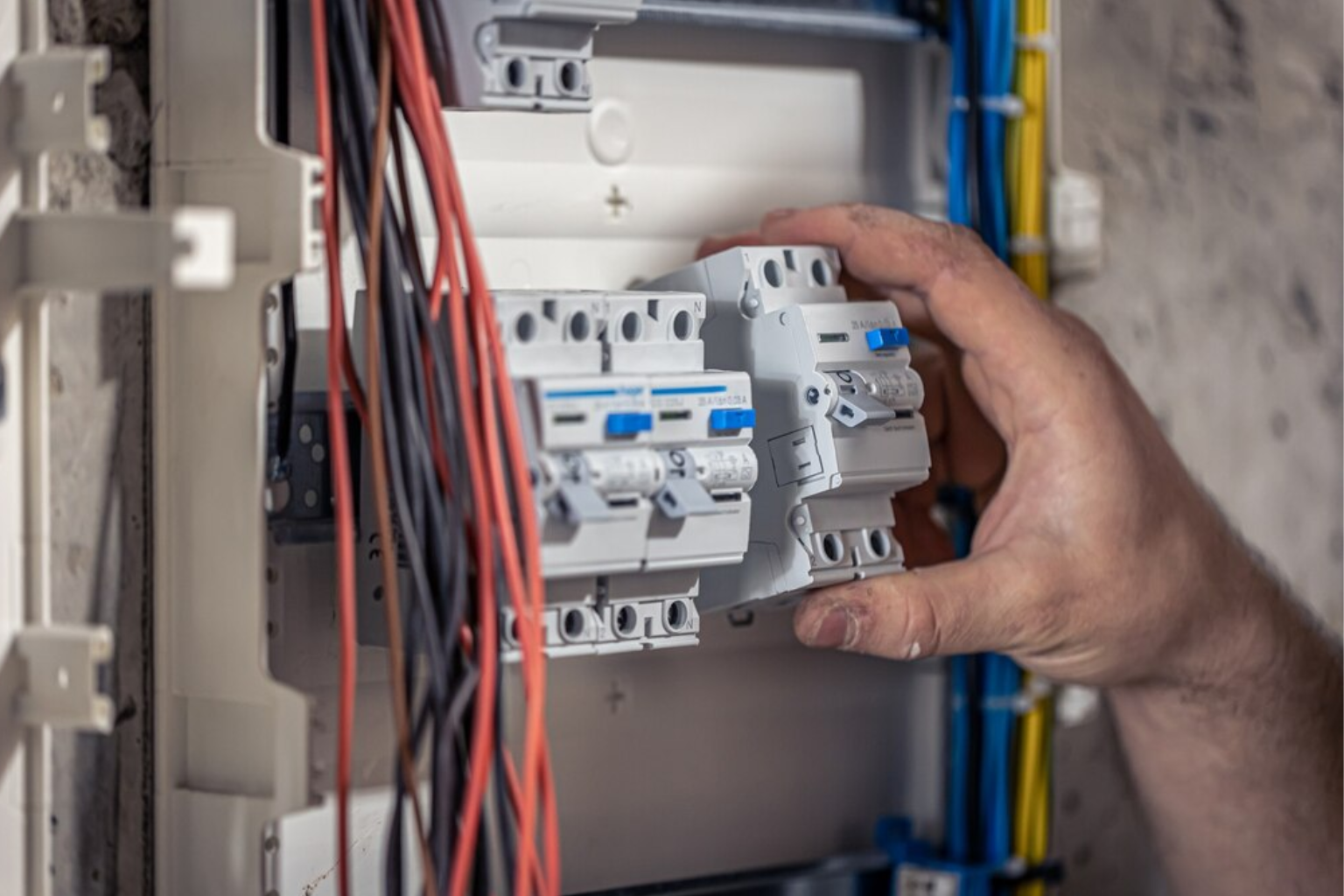
4. Residual Current Devices: Fire Protection, Not Just Shock Protection
RCDs are widely associated with human safety, but they also prevent fires caused by leakage currents.
Leakage doesn’t always cause shocks.
It causes localised heating, often inside walls or panels.
We’ve seen insulation fires caused by leakage currents as low as 200–300 mA that went unnoticed for months.
That’s why well-designed systems use RCDs:
- In distribution boards
- In moisture-prone environments
- With proper discrimination
Eurogrid RCDs prioritise sensitivity without instability, a balance many devices struggle to achieve.
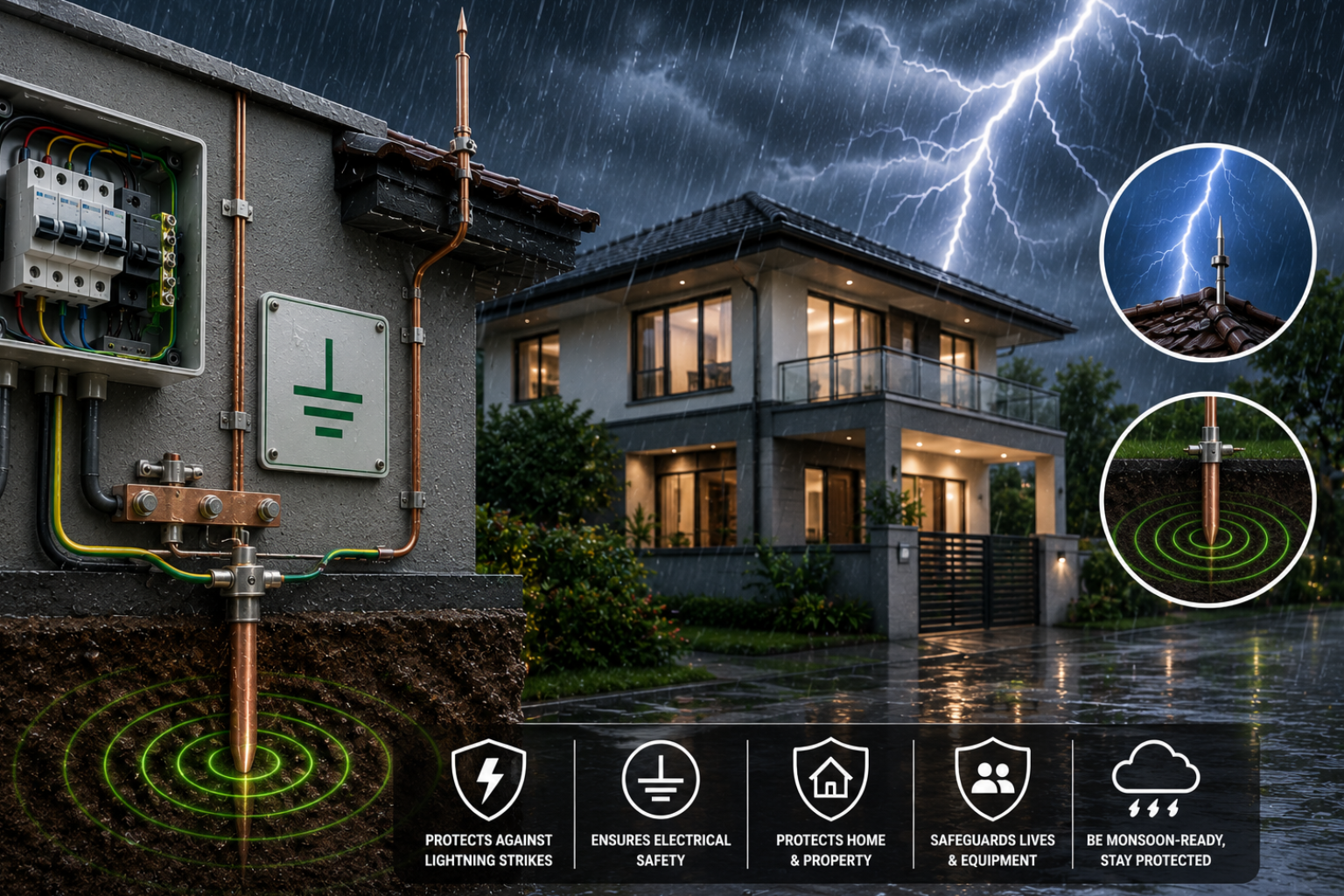
5. Surge Protection Devices: The Most Underrated Protection Layer
Surges rarely cause immediate failure.
They cause progressive damage.
In real installations, we’ve seen:
- PLCs fail months after lightning events
- Inverters degrade slowly after repeated micro-surges
- Control boards become unreliable with no obvious cause
SPDs don’t just protect against lightning. They protect against:
- Switching transients
- Utility disturbances
- Internal load changes
Without SPDs, your system is ageing faster than you think.
The Protection Layer Most Systems Are Missing: Arc Fault Awareness
Arc faults are dangerous because they:
- Don’t always draw high current
- Create extreme localised heat
- Occur intermittently
Traditional breakers weren’t designed to detect them.
In facilities with:
- Aging wiring
- High vibration
- Frequent reconnections
Arc fault protection isn’t optional; it’s overdue.
Common Circuit Protection Mistakes (Seen Repeatedly in the Field)
This is the section most AI-written articles avoid, but it’s where real value lies.
Mistake 1: Oversizing Protection Devices
This hides problems instead of solving them.
Mistake 2: Mixing Brands Without Coordination
Different trip curves behave differently, even at the same rating.
Mistake 3: Ignoring Ambient Temperature
Heat changes trip behaviour. Many failures trace back to this oversight.
Mistake 4: Assuming “No Trips” Means “Safe”
Some of the most dangerous systems never trip until they burn.
When NOT to Rely on a Single Protection Device
No single device can handle:
- Overload
- Short circuit
- Leakage
- Surge
- Arc faults
Layered protection is not redundancy; it’s a necessity.
Eurogrid’s protection philosophy emphasises system coordination rather than isolated components.
How to Think About Circuit Protection as a System
A practical framework we recommend:
- Source protection – MCCBs, fuses
- Distribution protection – MCBs, RCDs
- Equipment-level protection – SPDs, motor protection
- Fire-risk mitigation – Arc fault awareness
Each layer reduces the risk that the next one can’t.
Why Product Quality Matters More Than Ratings
Two breakers with identical ratings can behave very differently under fault conditions.
What separates high-quality circuit protection devices:
- Consistent materials
- Stable calibration
- Verified breaking capacity
- Long-term mechanical reliability
Eurogrid designs its circuit protection devices with repeatability and durability in mind, because protection that degrades over time is a liability.
Maintenance: The Difference Between Designed Safety and Real Safety
Even the best protection fails if ignored.
In our experience:
- RCDs fail silently
- SPDs lose effectiveness without visible signs
- Breakers drift from original calibration
Periodic testing isn’t optional; it’s part of protection.
Final Perspective: Circuit Protection Is Risk Management, Not Compliance
Electrical codes define minimums.
Good engineering goes beyond them.
Circuit protection devices don’t just:
- Prevent fires
- Protect equipment
- They protect continuity, reputation, and safety.
When implemented thoughtfully, using quality components from manufacturers like Eurogrid, they become among the most cost-effective risk controls in any electrical system.
And when they’re ignored or misapplied, the consequences are rarely immediate, but they are always expensive.